
Counties without building codes: what “no code” really means
“No building codes” is the most searched promise in off-grid real estate. It is real in parts of a handful of states, but it rarely means no permits, and it never means no consequences.
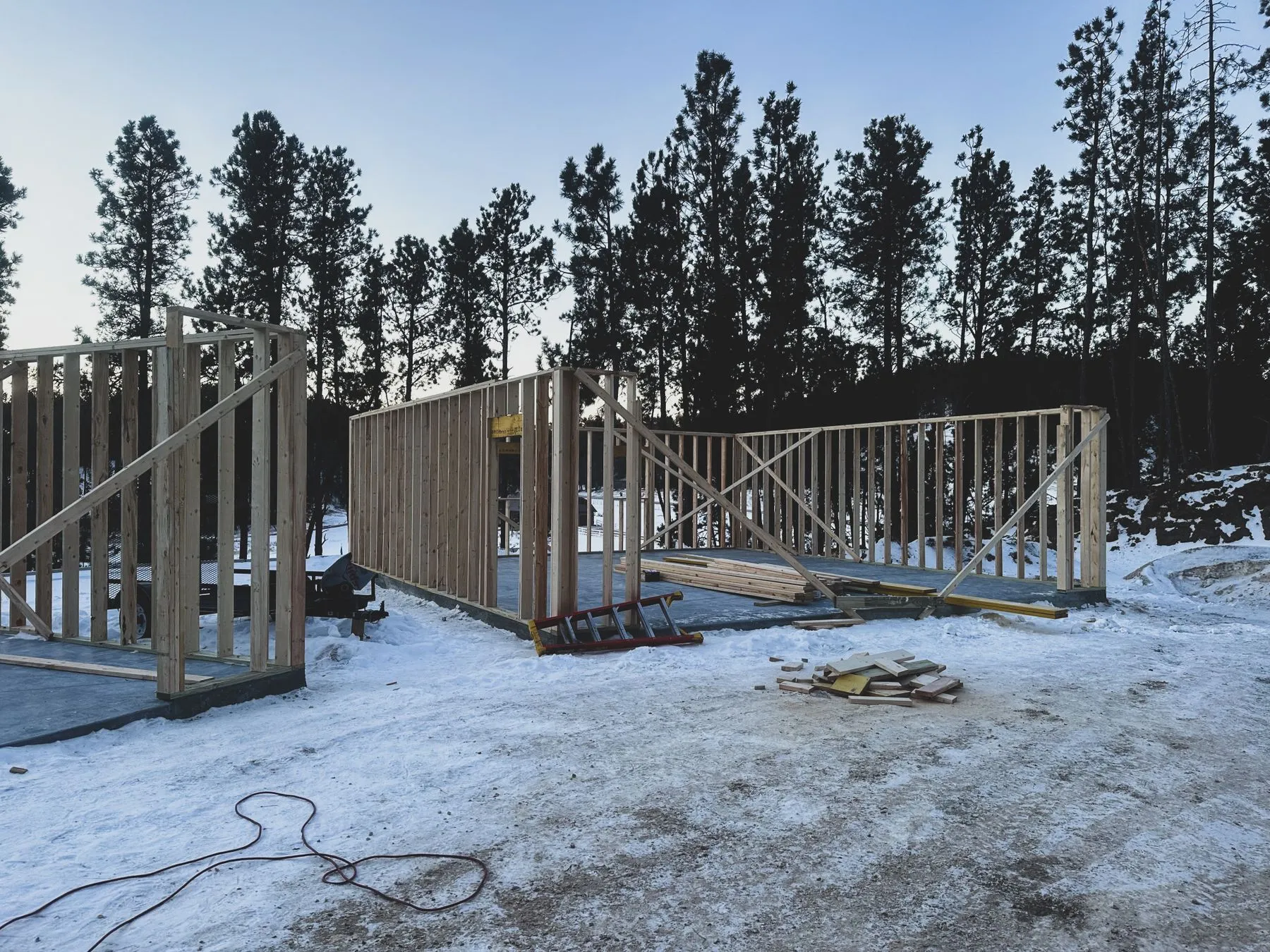
On July 20, 2026, the Tennessee State Fire Marshal’s Office listed 37 of the state’s 95 counties as “opt out” jurisdictions: places where the county commission has voted, by a two-thirds majority, to keep the state’s residential building code from applying to one- and two-family homes. In Benton, Cocke, Scott, Unicoi and 33 other counties, no building inspection is required for a new house outside the towns that run their own programs.
Every one of those houses still needs a state electrical permit before it can be wired, and a state-approved septic system before it is occupied. That is the pattern this article documents. Counties without building codes are real, and in some states they are common. What they rarely are is counties without permits, inspections or consequences.
Three things “no code” can mean
Listings, forums and the “no code county” lists that circulate online run together three different legal situations. The difference matters, because each one leaves a different set of rules in place.
- No code has been adopted. The state has no residential code of its own, or has one that applies only where a city or county adopts it. Missouri, Kansas, Arizona, Colorado, Nevada, Wyoming, the Dakotas, Idaho, Iowa, West Virginia and Texas outside cities fall here. If the county never adopted a code, there is no building permit to get.
- A code exists, but nobody has to enforce it. Kentucky, Maine, Minnesota, New Hampshire and Oklahoma have statewide codes on paper, but small towns and rural areas are not required to run permit and inspection programs. The code still applies to the work. You simply answer for it later, if ever, rather than at inspection time.
- Homes are exempt from the state code. Vermont’s state codes do not cover owner-occupied single-family homes, Montana exempts homes of fewer than five units outside certified jurisdictions, and Alaska’s fire marshal does not review homes of three units or fewer.
A fourth group, opt-out states, sits between the first two. Tennessee and Mississippi apply a state or state-mandated code by default and let counties vote themselves out of it.
Our 50-state building code table classifies every state’s framework. This article focuses on the states where the answer for a rural parcel can be “no building inspection at all,” and on what replaces it.
Tennessee: the one state with a named list
Tennessee is the only state we found that publishes an official, named, county-by-county list of places that do not enforce a residential code. It is also the clearest illustration of how narrow the “no code” label can be.
Tennessee did not apply a statewide code to one- and two-family homes until 2009 Public Chapter 529, the Tennessee Clean Energy Future Act, took effect on July 1, 2010. According to the University of Tennessee’s County Technical Assistance Service, the same law gave every county and city a way out: a resolution passed by a two-thirds vote exempting one- and two-family dwellings from the statewide standards, “regardless of whether the local jurisdiction is enforcing its own codes or has no codes at all.”
The exemption is deliberately temporary. It expires 180 days after the next election of the local legislative body, so each new county commission must pass it again by two-thirds to keep it. A simple majority can end it at any time. Since May 4, 2017, owners in opt-out areas can ask the State Fire Marshal to inspect their home anyway.
The Fire Marshal’s Residential Jurisdictions & Inspectors page sorts every county and city into three groups. On the list dated July 20, 2026:
- 50 counties are “exempt”: they enforce their own approved code, so you get a permit from the county.
- 8 counties use the State Residential Building Program: Campbell, Chester, Giles, Hardeman, Hawkins, Lauderdale, Meigs and Smith. The state issues the permit and a state-contracted inspector visits.
- 37 counties have opted out: Benton, Bledsoe, Carroll, Claiborne, Cocke, Decatur, Fentress, Franklin, Grainger, Grundy, Hardin, Henderson, Henry, Houston, Humphreys, Jackson, Johnson, Lake, Lawrence, Lewis, McMinn, McNairy, Monroe, Moore (Lynchburg), Morgan, Obion, Overton, Perry, Pickett, Polk, Scott, Sequatchie, Stewart, Unicoi, Van Buren, Wayne and Weakley.
Counting cities and towns as well, the list has 86 opt-out entries, 87 state-program entries and 300 exempt entries. A county’s status covers its unincorporated area only. Benton County has opted out, for example, but the city of Camden inside it is listed as exempt and enforces its own code. The University of Tennessee’s Municipal Technical Advisory Service estimates that opt-out counties and cities hold about 20 percent of the state’s population.
Now look at what opting out does not touch. Tennessee’s electrical rules, Tenn. Comp. R. & Regs. 0780-02-01, say no wiring may be installed without an electrical permit, and require state deputy inspectors to inspect new installations, including well pumps up to the wellhead. A homeowner may pull one property-owner permit every 12 months for their own residence, and that work is still inspected. Alternate power sources need backfeed protection approved by the power supplier, which matters for anyone tying a generator or solar system into a house. Septic systems need a TDEC construction permit before dirt work begins and a certificate of completion afterward. Our Tennessee guide covers that process.
Where rural homes can go uninspected
No other state publishes a list like Tennessee’s, so the picture elsewhere has to be assembled from statutes and the data agencies do publish. Below is what those sources show for the states most often named in “no code” searches.
Missouri: twelve counties with a code
Missouri has no statewide residential code, and it makes adopting a county code unusually hard. Under RSMo 64.170, only first- and second-class counties may adopt building codes, and a county that did not have one before August 28, 2001 needs the approval of voters in the unincorporated area. Smaller counties can regulate buildings only through zoning, which also requires a public vote.
The Missouri Department of Natural Resources links to a county building code dataset on the state’s open data portal. Of 114 counties, it lists a residential code for 12: Boone, Cass, Christian, Clay, Cole, Franklin, Greene, Jackson, Jefferson, Platte, St. Charles and St. Louis. St. Louis City, which is not part of any county, is also listed. The rows were last updated in August 2021, and DNR warns that its lists may not be current. Even so, the order of magnitude is clear: in roughly nine of ten Missouri counties, a house outside town needs no county building permit.
Septic is a different story. RSMo 701.031 requires a sewer connection or a compliant onsite system installed by a state-registered installer, with an exclusion for single-family lots of three acres or more (and some lots of 10 acres or more) where every part of the system stays more than 10 feet from the property line and nothing leaves the property.
Texas: a county code you can opt into, with no permit
Texas counties have no general residential building code for unincorporated areas. Local Government Code chapter 233, subchapter F, added in 2009, is the closest thing. It applies only in a county that adopts an order to use it. New single-family houses and duplexes must then meet the 2008 International Residential Code or the edition used in the county seat.
Even then there is no county permit. The law says it may not be read to require “prior approval by the county,” and it bars any fee to pay for enforcement. Instead, the builder hires an inspector (an engineer, architect, licensed inspector or ICC-certified residential inspector) for at least three inspections: foundation, framing and mechanical, and completion. The county may require notice before work starts and a copy of the final report. An owner-builder who will live in the house is exempt from the notice penalty. Manufactured and modular homes are excluded. In 2025, HB 3680 updated the subchapter’s platting cross-references, effective September 1, 2025.
State law still reaches rural Texas homes in two places. Occupations Code 1305.201(e) requires electrical work in unincorporated areas to meet standards at least as stringent as the state electrical code, although an owner who lives in the house may do the work. And Health and Safety Code 366.051 requires an on-site sewage permit from TCEQ or its local authorized agent. The main exception is in 30 TAC 285.3: one single-family home on a tract of 10 acres or more needs no septic permit if every part of the system is at least 100 feet from the property lines, the effluent stays on the property and it causes no nuisance or pollution.
Kentucky: a mandatory code nobody has to inspect
Kentucky shows why “no code” and “no inspection” are different claims. KRS 198B.060 keeps the Uniform State Building Code mandatory, but says “permits, inspections, and certificates of occupancy shall not be mandatory for single-family residences unless a local government passes an ordinance.” The current text, in effect since July 14, 2022, adds that the state “shall not preempt or assert jurisdiction” to enforce the code on single-family homes. Yet KRS 318.134 still requires a state plumbing installation permit, with a septic permit attached where one is proposed, and KRS 227.480 requires an electrical permit before electrical work begins.
Mississippi and Alabama: opting out, and opting in
Mississippi’s SB 2378 of 2014 told every county and city to adopt one of the last three editions of the IBC or IRC, but let any of them choose not to be covered by resolution within 120 days. The Mississippi Insurance Department summarizes the deadline as November 30, 2014. The department collects those forms but does not publish a list we could find. The law also excludes manufactured homes, farm structures and unattached hunting or fishing camps in unincorporated areas, the last by sworn affidavit.
Alabama went the other way recently. Act 2024-443 repealed the 2010 Energy and Residential Codes Board and gave the Home Builders Licensure Board authority over a state residential code, enforced only by local governments that run permit programs. Counties may adopt or drop a code for unincorporated areas by resolution. From January 1, 2027, licensed home builders must build to the applicable code. Owners building their own home to live in, and not offering it for sale, are exempt from the licensing law.
Montana and Vermont: homes outside the state code
MCA 50-60-102 exempts residential buildings of fewer than five units from Montana’s state building code. Building permits for homes exist only in the 41 jurisdictions the state has certified: 36 cities and towns and five counties, two of which (Pondera and Toole) are certified for commercial work only. Everywhere else, the Department of Labor & Industry still requires a state electrical permit for all electrical work, including a homeowner’s permit with state inspection.
Vermont’s 20 V.S.A. 2730 excludes owner-occupied single-family homes from the “public buildings” the Division of Fire Safety regulates, and the division’s permit sheet lists no state construction or electrical permit for them. But Vermont requires every new home to meet the Residential Building Energy Standards, with a signed certificate posted in the house and recorded in the town land records, and a state wastewater and potable water supply permit before construction.
The West and the Plains: local option, state wiring
Across the interior West and the northern Plains, building codes are a county choice, but state electrical programs fill the gap. ARS 11-861 lets an Arizona county adopt a code and exempt areas zoned rural or unclassified. Colorado counties may adopt codes under CRS 30-28-201, and where they do not, new construction gets state electrical and state plumbing inspections. Wyoming requires a state electrical wiring permit before a utility energizes new construction, except in locally delegated areas and on farms or ranches of 40 acres or more of deeded land. North Dakota’s state electrical board inspects all electrical installations, and South Dakota requires a wiring permit before a power supplier connects a new service. Idaho’s Division of Occupational and Professional Licenses issues state electrical permits, including to homeowners working on their own residence.
For off-grid buyers, the twist is that several of these state wiring rules key on the utility connection. A house that never connects to the grid may never trigger the utility’s demand for proof of a permit, but the permit requirement itself does not disappear. Our off-grid solar guide covers what inspectors look for in a battery-based system.
State-by-state table
The table covers 26 states where at least some new single-family homes can be built without a local or state building inspection. Each row links to the primary source we read. “Still required statewide” lists the permits that do not depend on a local building code; it is not a complete list of rules for any parcel. We could not verify Arkansas, Delaware or Ohio from primary sources for this edition and left them out.
26 states
| Alabama | Local option | Act 2024-443 (Ala. Code 34-14A-12) gives the Home Builders Licensure Board authority over a state residential code, enforced only by local jurisdictions with permit and inspection programs. Counties may adopt or discontinue a code for unincorporated areas by resolution. From January 1, 2027, licensed builders must build to the applicable code; owner-builders building their own home are exempt from licensing.Code of Alabama 34-14A-12 (Act 2024-443) Source | None found | ADPH onsite sewage permit (Ala. Admin. Code ch. 420-3-1) |
|---|---|---|---|---|
| Alaska | Homes exempt from state code | State Fire Marshal plan review exempts residential buildings of three units or fewer, and state electrical inspection covers dwellings of three units and up. Homes must meet the BEES energy standard only when Alaska Housing Finance Corporation or other state financing is used.Alaska DPS: Plan Review Bureau Source | Fire Marshal lists 13 deferred plan-review jurisdictions (covers commercial review, not homes) | ADEC septic rules (18 AAC 72); BEES if state-financed |
| Arizona | Local option | ARS 11-861: a county board of supervisors may adopt a building code for zoned unincorporated areas and may exempt areas zoned rural or unclassified. ARS 32-1121 exempts owner-builders from contractor licensing if the home is not for sale or rent.ARS 11-861 Source | None found | ADEQ review of onsite wastewater design (ARS 49-104) |
| Colorado | Local option | CRS 30-28-201 authorizes, but does not require, county building codes. Where no local program exists, new construction gets state electrical (CRS 12-115-120) and state plumbing (CRS 12-155-120) inspections.CRS 12-115-120 (state electrical inspection) Source | None found | State electrical and plumbing inspection; county septic permit |
| Idaho | Local option | Idaho Code 39-4116: a local government without a program may elect by ordinance to enforce the Idaho Residential Code; those that do must adopt the state-adopted codes. No state residential building permit was found.Idaho DOPL: Building Code Act statutes (Idaho Code 39-41) Source | None found | DOPL electrical (and plumbing/HVAC) permits; health district septic permit |
| Illinois | Builder standard, no inspection | Since January 1, 2025 (Public Act 103-0510), local codes must be at least as strict as the IRC on structure. Where no local code exists, new homes must follow the IRC (or a code within 100 miles if buyer and builder agree), but no inspection agency is created.Illinois CDB: Building Codes and Regulations Source | None found | Illinois Plumbing Code and Energy Conservation Code; county septic |
| Indiana | Local option | State rules exist, but one- and two-family dwellings fall to local government. Where no local entity enforces them the county may inspect; otherwise IDHS says the residential issue becomes a private civil matter.IDHS: Code Enforcement Source | None found | County health department septic permit |
| Iowa | Local option | Iowa Code 103A.10: the state building code applies only where a city or county adopts it (and in cities over 15,000 with no code); energy standards apply to all construction. New single-family electrical service gets state inspection (Iowa Code 103.23).Iowa Code 103A.10 Source | None found | State electrical inspection; county septic and well standards (Iowa Code 455B.172), with septic inspection at sale |
| Kansas | Local option | No statewide residential code. Counties act under home rule (K.S.A. 19-101a), and K.S.A. 66-1227 says the state has no authority over residential energy standards. Builders and sellers of new homes must give buyers an energy-efficiency disclosure (K.S.A. 66-1228).K.S.A. 66-1227 Source | None found | Septic permits where the county has adopted a sanitary code (K.S.A. 19-3702); agricultural tracts over 10 acres exempt unless the code says otherwise |
| Kentucky | Code on paper, inspection optional | KRS 198B.050 makes the Uniform State Building Code mandatory, but KRS 198B.060 says permits, inspections and certificates of occupancy are not mandatory for single-family homes unless a local ordinance requires them, and the state may not assert jurisdiction over them.KRS 198B.060 Source | None found | State plumbing permit (KRS 318.134); electrical permit (KRS 227.480); septic permit (902 KAR 10:085) |
| Maine | Code on paper, inspection optional | MUBEC applies statewide, but 10 M.R.S. 9724 requires enforcement only in municipalities over 4,000 residents. Smaller towns may enforce it but cannot adopt a different code. Log homes, post-and-beam and timber-frame construction are exempt.10 M.R.S. 9724 Source | None opened | Town plumbing inspector in every municipality (30-A M.R.S. 4221); state subsurface wastewater rules (30-A M.R.S. 4211) |
| Minnesota | Code on paper, inspection optional | Minn. Stat. 326B.121: the State Building Code applies statewide but is enforceable by a municipality only if adopted. Municipalities under 2,500 outside metro counties need not enforce it.Minn. Stat. 326B.121 Source | None opened | State electrical inspection of every new installation where no local program (326B.36); county septic ordinances (115.55) |
| Mississippi | Counties can opt out | SB 2378 (2014) required counties and cities to adopt a recent IBC or IRC edition unless they opted out by resolution within 120 days, by November 30, 2014. Manufactured homes, farm structures and unattached hunting or fishing camps (by affidavit) are excluded.Mississippi Insurance Department: Mississippi Uniform Building Codes Source | No published list found; MID collects the forms | MSDH onsite wastewater approval |
| Missouri | Local option | No statewide residential code. First- and second-class counties may adopt building codes, but one adopted after August 28, 2001 needs approval from voters in the unincorporated area (RSMo 64.170). Other counties can regulate building only through voter-approved zoning.Missouri DNR: Energy Codes by Jurisdiction Source | State dataset (2021): 12 of 114 counties list a residential code for unincorporated areas | State onsite sewage law (RSMo 701.025–.059), except qualifying lots of 3 or 10 acres; well certification (RSMo 256.614) |
| Montana | Homes exempt from state code | MCA 50-60-102 exempts residential buildings of fewer than five units from the state building code. Only certified local jurisdictions issue building permits for homes.Montana DLI: Certified Government Jurisdictions Source | Yes: 41 certified jurisdictions (36 cities and towns, 5 counties, two of them commercial-only) | State electrical permit outside certified areas, including homeowner permits; DEQ/county septic |
| Nebraska | Local option | Building codes are adopted and enforced by cities and counties. The 2018 IECC applies statewide to new homes, and the state enforces it where no local energy code exists.Nebraska DWEE: Energy Codes Source | None found | State energy code; State Electrical Division permits, including homeowner permits; onsite wastewater registration with certified installers (Title 124) |
| Nevada | Local option | NRS 278.580: the governing body of any city or county may adopt a building code. No statewide residential code applies.NRS 278.580 Source | None found | State or county septic approval (not verified here) |
| New Hampshire | Code on paper, inspection optional | RSA 155-A:2 says all buildings must comply with the state building code. Where a town has no enforcement, contractors notify the fire marshal, except for one- and two-family homes, and the contractor, not the town, is responsible for compliance.RSA 155-A:2 Source | None found | NHDES septic approval (RSA 485-A:29) |
| North Dakota | Local option | NDCC 54-21.3-03: a city, township or county that elects to enforce a building code must use the state building code. Nobody is required to enforce it.NDCC ch. 54-21.3 Source | None found | State electrical inspection of all installations (NDCC 43-09-22); plumbing inspection only where connected to public water or sewer |
| Oklahoma | Code on paper, inspection optional | The OUBCC adopts minimum codes for the whole state (2024 IRC from September 14, 2026) but does not enforce them. In unincorporated areas the Construction Industries Board enforces trade codes, and general county building-code authority is limited to the largest counties and planning districts.OUBCC: Frequently Asked Questions Source | None found | DEQ authorization to construct a septic system; notice of trade work to the CIB where no local permit exists |
| South Dakota | Local option | SDCL 11-10-12 lets municipalities adopt the 2024 IRC; the default 2024 IBC design standard in 11-10-6 does not apply to residential structures or farmsteads.SDCL 11-10-6 Source | None found | State wiring permit before a power supplier connects (SDCL 36-16-27) |
| Tennessee | Counties can opt out | TCA 68-120-101 applies the 2018 IRC statewide, enforced by the State Fire Marshal where no exempt local program exists. A county or city can opt out by a two-thirds vote; the exemption expires 180 days after the next local election unless re-passed.TDCI: Residential Jurisdictions & Inspectors Source | Yes: 37 of 95 counties opted out as of July 20, 2026 (State Fire Marshal) | State electrical permit and inspection (TCA 68-102-143); TDEC septic permit |
| Texas | Local option | No statewide residential code outside cities. LGC ch. 233, subch. F lets a county opt in by order to IRC standards for new homes, enforced by builder-hired inspections, with no county permit, approval or fee. Owner-builders living in the home are exempt from the notice penalty.Texas Local Government Code ch. 233 Source | None found | TCEQ or authorized-agent septic permit (exempt on 10+ acres for one home if conditions met); state electrical code standards in unincorporated areas |
| Vermont | Homes exempt from state code | 20 V.S.A. 2730 excludes owner-occupied single-family homes from the public buildings the state regulates. The Division of Fire Safety requires no state construction or electrical permit for them.Vermont DFS: Permit & Licensing Requirements Source | Not applicable (exemption is statewide) | Residential Building Energy Standards certificate recorded in town land records (30 V.S.A. 51); state wastewater and potable water permit (10 V.S.A. 1973) |
| West Virginia | Local option | W. Va. Code 15A-11-5: the State Building Code has force only in counties and municipalities that adopt it, and they enforce it.W. Va. Code 15A-11-5 Source | None found | Health department septic permit (not verified here) |
| Wyoming | Local option | No state residential code enforcement; the fire marshal delegates code authority to cities and counties that apply (W.S. 35-9-121). A state electrical permit is required before a utility energizes new construction, except in delegated areas and on farms or ranches of 40 acres or more of deeded land.Wyoming Statutes Title 35 Source | None found | State electrical permit (W.S. 35-9-120); DEQ or delegated-county small wastewater permit |
Sources checked October 2026. “Official list” means a government-published list of jurisdictions that do or do not enforce a residential code.
Why the map looks like this
The statutes behind this table share one feature: counties get building-code power only when the legislature grants it, and the grant is usually optional. Arizona’s county boards “may” adopt a code, Colorado’s are “authorized” to, North Dakota’s counties enforce one only if they elect to, and Missouri’s requirement that voters in the unincorporated area approve a county code, and Texas’s refusal to let counties charge a fee or require approval even under its opt-in system, are deliberate limits on county government, not oversights.
When states did extend codes to homes, they often bought rural support with an exit. Tennessee’s 2009 law brought one- and two-family homes under state standards but let counties vote out, and the 180-day expiry forces each newly elected commission to decide again. Mississippi’s 2014 law gave counties four months to decline. Both designs make the code the default and opting out a recorded public act, which is why those states can produce lists at all.
The direction of travel is toward more coverage, not less. Alabama will require licensed builders to follow a state residential code from 2027. Illinois has set IRC-based structural minimums since January 1, 2025. Colorado’s HB22-1362 requires any county that updates its building code to adopt a modern energy code with it, though it does not force code-less counties to adopt one. Nationally, FEMA’s Building Code Adoption Tracking reports that only 34 percent of natural hazard-prone jurisdictions have adopted current hazard-resistant codes.
Electrical and septic rules followed a different path. Faulty wiring causes fires and failing septic systems can contaminate neighbors’ wells, and states generally regulate those risks directly, through state electrical boards and health departments, rather than waiting for counties to adopt building codes. That is why the trades survive in places where the building code never arrived.
What still applies in a no-code county
Assume a parcel truly has no residential building code. The following rules can still apply, and most of them come from the state or federal government, so a county’s decision does not switch them off.
Septic and wastewater
Onsite sewage is regulated by a state health or environmental agency, or by counties under state law, in every state we reviewed, usually with a permit before construction. The exceptions are narrow and conditional: Texas’s 10-acre rule, Missouri’s three- and 10-acre exclusions, and Kansas, where septic permits come through county sanitary codes that counties may adopt. A composting toilet rarely removes the need for a greywater system. See our septic and composting toilet guide and the greywater article.
Electrical and plumbing
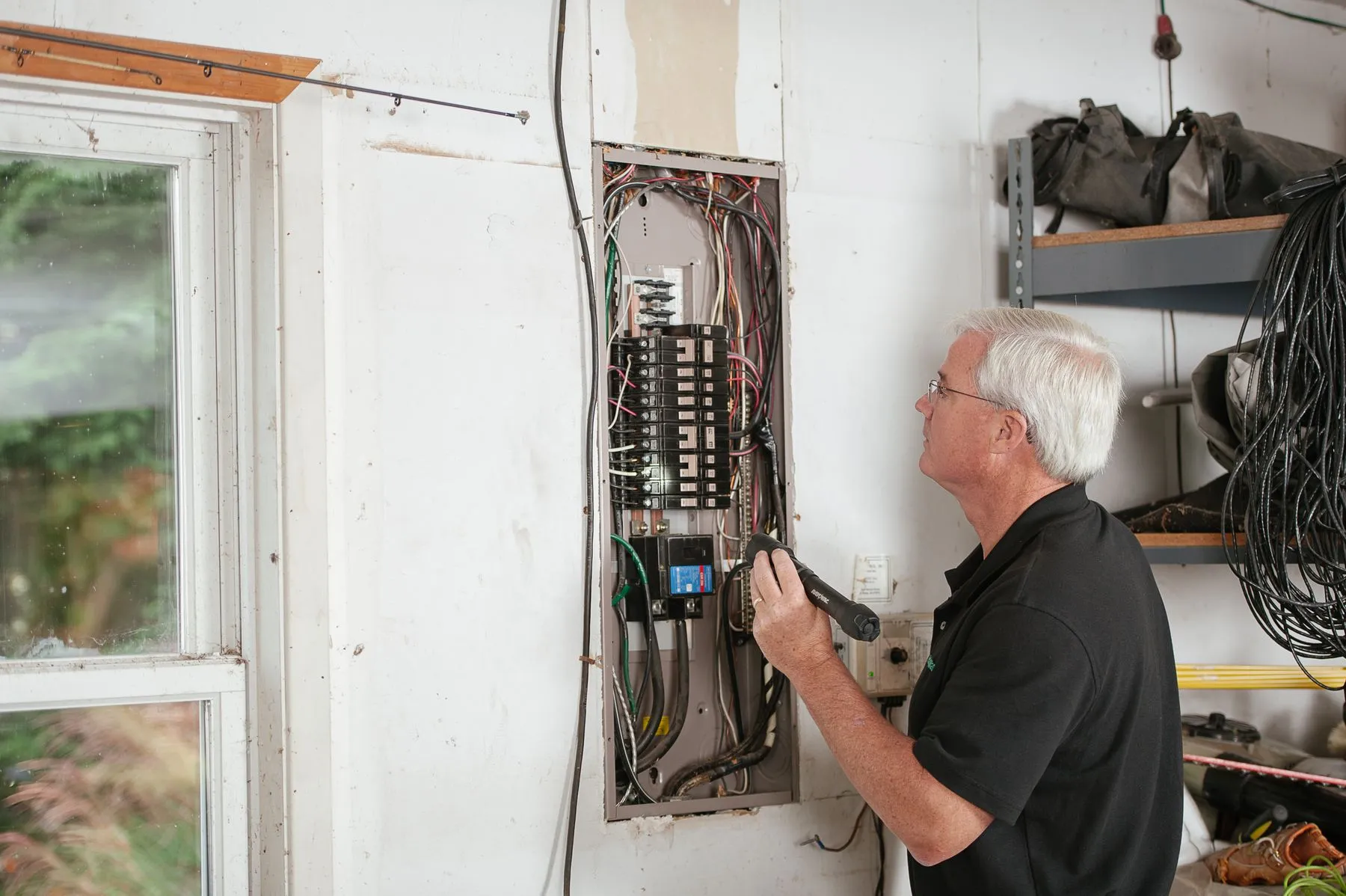
State electrical permits or inspections apply where local ones do not in Tennessee, Colorado, Iowa, Minnesota, Montana, Nebraska, North Dakota, South Dakota, Wyoming and Kentucky, among others. Kentucky also requires state plumbing permits, Colorado inspects plumbing where no local program exists, and Maine requires every town to appoint a plumbing inspector. Many states let owner-occupants do their own work, but owner permits are still permits.
Floodplains
A county that participates in the National Flood Insurance Program must, under 44 CFR 60.3, “require permits for all proposed construction or other development in the community, including the placement of manufactured homes,” so it can determine whether the site is in a flood-prone area. That duty does not depend on whether the county has adopted a building code, so a county with no building department may still have a floodplain administrator and a floodplain permit. Ask for it by name.
Manufactured homes
A HUD-code manufactured home is built to federal standards in the factory, wherever it is placed, and its installation is regulated too. Under 24 CFR 3286.5, HUD administers the installation program in any state that does not run its own qualifying program, so a licensed installer and an installation certification are required even in a county with no codes. Tiny houses and RVs are a separate question, covered in our tiny house and RV living articles.
Energy codes, zoning and private covenants
Some states apply an energy code even where there is no building code: Vermont’s RBES, Iowa’s energy standards for all construction and Nebraska’s 2018 IECC, which the state enforces where no local energy code exists. Zoning, subdivision and road-access rules are separate from building codes, and a county with no building code may still zone. Deed restrictions and subdivision covenants apply regardless of any government rule, and in rural subdivisions they often set minimum home sizes or ban living in RVs.
Lenders, insurers and the next buyer
The longest-lasting consequence of building without inspections shows up when someone needs a mortgage. Federal loan programs assume someone inspected the house. Where the county did not, the lender has to arrange it.
FHA’s rule is 24 CFR 200.145(c). Where the local government enforces a code, the lender files the building permit and certificate of occupancy. “In jurisdictions that do not provide building code enforcement and requisite documentation, three inspections are required for new construction,” carried out by an ICC-certified Residential Combination Inspector or Combination Inspector who certifies the work is complete “in compliance with any applicable building code.” Only if no such inspector is available may a licensed and bonded architect, engineer or contractor do it. HUD adopted this version in a final rule effective August 2, 2018.
The inspections happen at stages of construction, and framing cannot be inspected once the walls are closed. An owner-builder in a no-inspection county who hopes to use an FHA loan, or to sell to a buyer who will, needs to arrange those inspections before the drywall goes up.
Conventional loans work through the appraisal. Under Fannie Mae’s Selling Guide B4-1.3-04, the appraiser reports whether the property is a legal conforming use, a legal non-conforming use, an illegal use or has “no local zoning.” Under B4-1.3-05, an addition “that does not have the required permit” must be described along with its effect on value. Where no permit was required, nothing is flagged, but the appraiser still rates quality and condition, and an unconventional house with no comparable sales nearby can appraise well below its cost.
Insurers price code enforcement too. ISO’s Building Code Effectiveness Grading Schedule rates communities from 1 (exemplary enforcement) to 10, and says communities with well-enforced, up-to-date codes “should demonstrate better loss experience, which can be reflected in lower insurance rates.”
Finally, the code does not always vanish from the legal picture just because no one inspected. In New Hampshire, RSA 155-A:2 says all buildings “shall comply with the state building code” and puts responsibility on the contractor where the town has no enforcement. Kentucky’s code remains mandatory even though inspections are not. If a later buyer, insurer or injured guest argues the house was not built to the code that applied, an absent inspector is not a defense.
How to confirm a parcel before you buy
A listing’s “no codes” line is a claim about one local government at one point in time. Check it the way you would check a survey.
- Find the jurisdiction. Confirm whether the parcel is inside a city, a city’s extraterritorial area, or unincorporated county land. In Tennessee, a county can be opt-out while a town within it enforces a code.
- Ask the right office in writing. Email the county planning or building office (or the county clerk if there is none) and ask: “For a new single-family home on parcel [number], is a building permit required? Which residential code applies, and which agency inspects electrical, plumbing and septic work?” Ask for the answer on letterhead or by email from a named official. Our records request template can be adapted.
- Check the state list where one exists. Tennessee’s Fire Marshal list and Montana’s certified-jurisdiction list are the two we found. In Missouri, check the state dataset, then confirm with the county, because it dates from 2021.
- Call the state trade agencies. Ask the state electrical board or fire marshal whether a state wiring permit applies, and how inspection works if the house will not connect to a utility.
- Get a septic site evaluation before closing. A soil test that fails is the most common reason a cheap rural lot cannot carry a house, code or no code.
- Check the flood map and covenants. Look up the parcel on FEMA’s flood map and read the recorded deed restrictions. Ask the title company for copies.
- Talk to a lender early. If you will ever need a mortgage or refinance, ask how the lender handles new construction in a county without inspections before you pour the foundation.
No parcel number or county named. “No restrictions” on a lot inside a platted subdivision, which usually has recorded covenants. No mention of septic suitability or a perc test. Claims that “you can live in an RV” with no reference to county rules. A seller who says opt-out status is permanent; in Tennessee it is renewed after every local election. And any listing that implies no permits at all: our research found no state where electrical, septic and floodplain rules all disappear at once.
Our land-buying guide and 55-item buyer checklist cover the rest of the due diligence, and the build guide sets out the order of permits once you own the land.
Questions readers ask
Which states have counties with no building codes?
In our review, new homes can be built without any residential building inspection in parts of the 26 states in our table. The clearest cases are Tennessee, where 37 of 95 counties had opted out of the state residential program as of July 20, 2026; Missouri, where a 2021 state dataset lists a residential code for only 12 of 114 counties; and Texas, where counties have no general residential code at all unless they opt into a limited, permit-free inspection system. Vermont and Montana exempt most single-family homes from their state building codes outright.
Do I need a permit to build in a county with no building code?
Usually yes, just not a building permit. Septic permits are required almost everywhere, electrical permits or inspections are statewide in states such as Tennessee, Wyoming, Montana, South Dakota, North Dakota, Minnesota, Iowa and Colorado, and any construction in a mapped floodplain needs a floodplain permit in communities that take part in the National Flood Insurance Program. Zoning, road-access and well rules may also apply.
Is a house built without inspections legal?
If no code applied when it was built, it was legal to build. That does not make it easy to finance or insure. FHA requires three inspections by an ICC-certified inspector for new construction where the local government does not inspect, and appraisers must comment on unpermitted work. Kentucky and New Hampshire also keep their codes on the books for homes that nobody inspects, which leaves the builder responsible for meeting them.
Can a county that has no building code adopt one later?
Yes, and in some states it can happen quickly. Tennessee opt-out resolutions expire 180 days after the next local election unless the governing body passes them again by a two-thirds vote, and a simple majority can end them at any time. Alabama counties may adopt or discontinue a code by resolution. New codes usually apply to work started after their effective date, so get the current status in writing before you start, not when you bought the land.
Are owner-builders exempt from building codes?
Owner-builder exemptions are usually from contractor licensing, not from codes. Arizona, Alabama and Texas, for example, let owners build their own homes without a contractor license, and many states let owner-occupants do their own wiring or plumbing, but the work is still subject to whatever code and inspection the area requires. Selling or renting the house soon after it is finished can undo the exemption.
Sources
Official and primary sources consulted for this article, checked October 17, 2026. Laws change; open the source before relying on a summary.
- Residential Jurisdictions & Inspectors — Tennessee Department of Commerce & Insurance, State Fire Marshal’s Office. List “accurate as of 7/20/2026.” The site blocks automated access; we read the Internet Archive copy of July 26, 2026
- Tennessee Clean Energy Future Act of 2009 (CTAS-617) — University of Tennessee County Technical Assistance Service. Opt-out vote, 180-day expiry and owner-requested inspections under TCA 68-120-101
- Opt-Out Cities (reviewed 08/17/2026) — University of Tennessee Municipal Technical Advisory Service
- Tenn. Comp. R. & Regs. ch. 0780-02-01, Electrical Installations — Tennessee State Fire Marshal (hosted by MTAS)
- SSDS Frequently Asked Questions — Tennessee Department of Environment and Conservation
- County Building Codes for Missouri (dataset, rows updated August 11, 2021) — Missouri Department of Natural Resources via data.mo.gov
- Energy Codes by Jurisdiction — Missouri Department of Natural Resources
- RSMo 64.170 (county building codes, voter approval) — Missouri Revisor of Statutes
- RSMo 701.031 (onsite sewage, lot-size exclusions) — Missouri Revisor of Statutes
- Local Government Code ch. 233, subch. F — Texas Legislature
- HB 3680, 89th Legislature (enrolled) — Texas Legislature
- Health and Safety Code ch. 366 (on-site sewage permits) — Texas Legislature
- 30 TAC 285.3 (septic exemption for 10-acre tracts) — Texas Commission on Environmental Quality, via Cornell LII
- Occupations Code ch. 1305 (electricians) — Texas Legislature
- KRS 198B.060 — Kentucky General Assembly
- KRS 318.134 (plumbing permits) — Kentucky General Assembly
- KRS 227.480 (electrical permits) — Kentucky General Assembly
- SB 2378 (2014), as passed — Mississippi Legislature
- Mississippi Uniform Building Codes — Mississippi Insurance Department, State Fire Marshal
- Code of Alabama 34-14A-12 and 34-14A-6 (Act 2024-443) — Alabama Legislature (ALISON)
- MCA 50-60-102 — Montana Legislature
- Certified Government Jurisdictions — Montana Department of Labor & Industry, Building Codes
- Electrical Permits — Montana Department of Labor & Industry
- 20 V.S.A. 2730 — Vermont General Assembly
- Permit & Licensing Requirements code sheet (April 2022) — Vermont Division of Fire Safety
- 30 V.S.A. 51 (Residential Building Energy Standards) — Vermont General Assembly
- 10 V.S.A. 1973 (wastewater and potable water permits) — Vermont General Assembly
- 10 M.R.S. 9724 (MUBEC enforcement) — Maine Legislature
- 30-A M.R.S. 4221 (local plumbing inspectors) — Maine Legislature
- RSA 155-A:2 — New Hampshire General Court
- Minn. Stat. 326B.121 and 326B.36 — Minnesota Revisor of Statutes
- Iowa Code 103A.10 and 103.23 — Iowa Legislature
- Code Enforcement — Indiana Department of Homeland Security
- Building Codes and Regulations — Illinois Capital Development Board
- ARS 11-861 — Arizona Legislature
- CRS 30-28-201, 12-115-120 and 12-155-120 — Colorado Revised Statutes, via Colorado Public Law
- HB22-1362 — Colorado General Assembly
- Wyoming Statutes Title 35 (35-9-120, 35-9-121, 35-9-123) — Wyoming Legislature
- NDCC ch. 54-21.3 and 43-09 — North Dakota Legislative Branch
- SDCL 11-10-6 and ch. 36-16 — South Dakota Legislature
- Idaho Building Code Act statutes — Idaho Division of Occupational and Professional Licenses
- NRS 278.580 — Nevada Revised Statutes, via Nevada Public Law
- K.S.A. 66-1227 — Kansas Office of Revisor of Statutes
- Energy Codes — Nebraska Department of Water, Energy, and Environment
- Frequently Asked Questions — Oklahoma Uniform Building Code Commission
- Frequently Asked Questions — Oklahoma Construction Industries Board
- W. Va. Code 15A-11-5 — West Virginia Legislature
- Plan Review Bureau — Alaska Department of Public Safety, Division of Fire and Life Safety
- 24 CFR 200.145, Property and mortgage assessment — eCFR (HUD/FHA)
- Streamlining Inspection Requirements for FHA Single Family Mortgage Insurance, 83 FR 31042 (July 3, 2018) — Federal Register
- B4-1.3-04, Site Section of the Appraisal Report — Fannie Mae Selling Guide
- B4-1.3-05, Improvements Section of the Appraisal Report — Fannie Mae Selling Guide
- 44 CFR 60.3, Flood plain management criteria — eCFR (FEMA)
- 24 CFR 3286.5, Overview of installation program — eCFR (HUD)
- Building Code Adoption Tracking — Federal Emergency Management Agency
- Building Code Effectiveness Grading Schedule (BCEGS) — ISO / Verisk (industry source)
Keep reading
- Tiny house laws by state: Appendix Q, wheels and the 400-square-foot line
- Can you live in an RV on your own land? A 50-state reality check
- Rank all 50 states on the factors that matter to you
- Find the authorities and starting rules for your state
Articles are reported from official statutes, regulations, agency guidance and public datasets, linked above. They explain how rules work; they do not approve a particular property. Read the research method or report an error.