
Tiny house laws by state: Appendix Q, wheels and the 400-square-foot line
A tiny house is legal or illegal depending on what the law decides it is: a house, a manufactured home, a recreational vehicle or a park model. States have answered that question very differently.
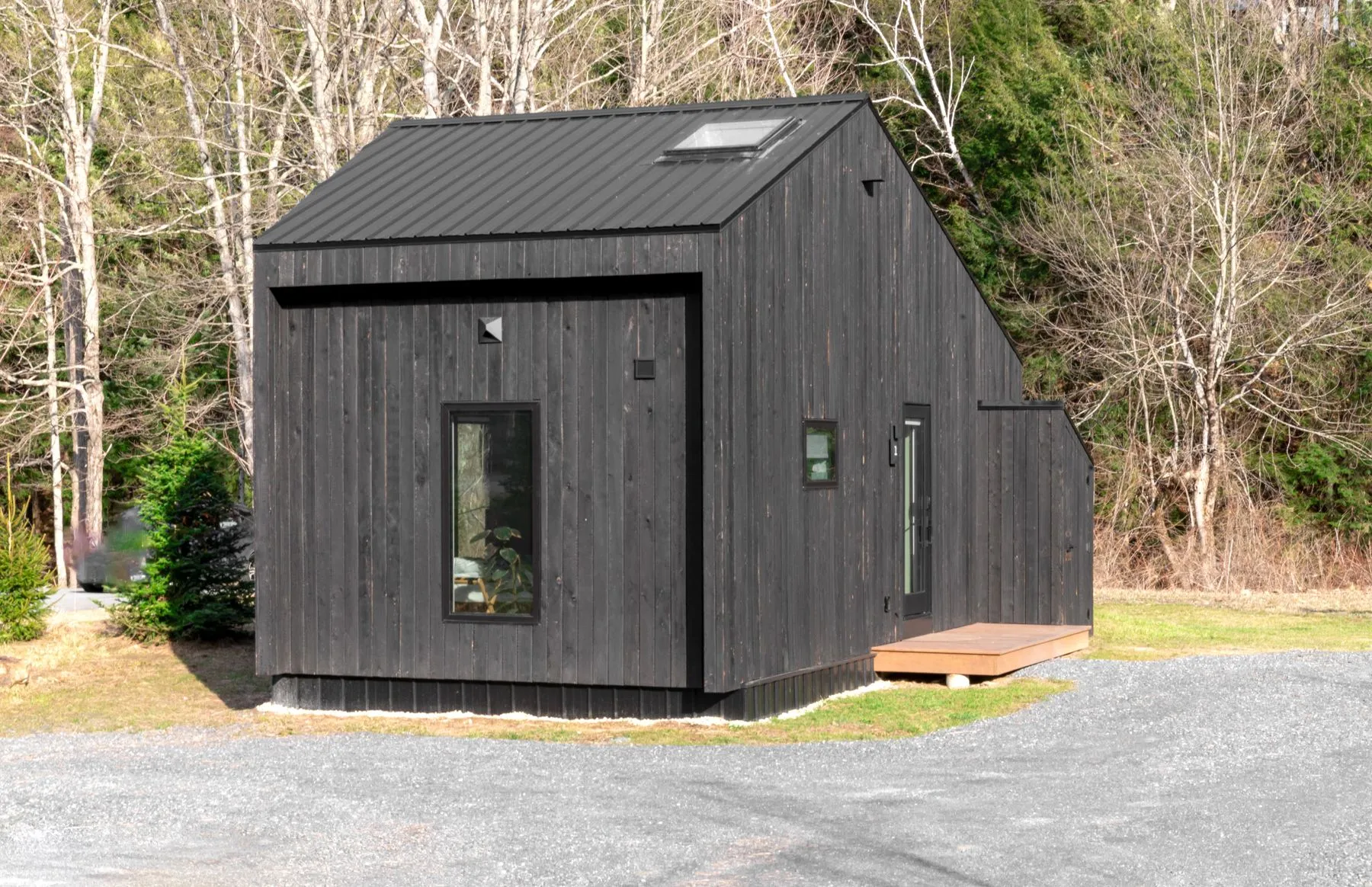
Build a 300-square-foot house on a trailer to the RV or park model standard and take it to Maine, and state law calls it a “tiny home,” a vehicle that towns must allow wherever a single-family house is allowed. Drive the same house to New Mexico and the state residential code says it is a recreational vehicle for as long as the axle stays on. Take it to New Hampshire after September 13, 2026, and a new law says a tiny house on wheels built for living in is not a camp trailer or RV at all.
Those three answers come from three states that have actually thought about the question. Most have not. We checked the residential code adopted in every state for the national tiny house appendix and for any law on tiny homes on wheels. Only 19 states have written the appendix into a code they apply statewide. Two of those quietly changed the 400-square-foot limit that defines a tiny house: Hawaii raised it to 500 and New Hampshire to 600.
Three states, three answers
The reason a tiny house is hard to regulate is that it sits on the border between categories the law already has. On a foundation it is a small house, so the residential building code applies. On a trailer it looks like a recreational vehicle, which is built to an industry standard and regulated mostly as a vehicle. Factory-built on a steel chassis and bigger than 320 square feet, it can meet the federal definition of a manufactured home. Each category comes with a different inspector, a different label, a different set of zoning rules and a different answer to the only question most owners care about: can I live in it full time?
- Maine defines a tiny home as a living space of no more than 400 square feet, permanently built on a frame or chassis, designed for permanent living, built to the park model (ANSI A119.5) or RV (NFPA 1192) standard and without its own engine. Since 2021 30-A MRSA §4363 says a town “shall permit” one on any lot where single-family homes are allowed, or as an accessory structure, subject to the same land use rules.
- New Mexico rewrote the appendix in its 2021 Residential Building Code (14.7.3.28 NMAC). Tiny houses “constructed on a chassis with permanent axle shall be considered recreational vehicles” and licensed as RVs while the axle remains. Remove the axles and set the house on a foundation, and it must meet the residential code, including the tiny house appendix.
- New Hampshire passed HB 1681 (Chapter 330, signed July 15, 2026, effective September 13, 2026). It defines a “tiny house on wheels” as a tiny house on a trailer chassis without motive power and says it “shall not be considered a camp trailer or recreational vehicle when constructed for human habitation.” Towns may treat tiny houses, tiny houses on wheels and yurts as single-family homes or accessory dwelling units.
Federal law, the model building code and the RV industry each draw their own lines, and most states have simply inherited them. The rest of this article walks through those lines and then through what every state has done with the one tool written specifically for tiny houses.
What the tiny house appendix changes
The International Residential Code (IRC) is the model code most states and counties use for one- and two-family homes. It was written for ordinary houses, and several of its rules are hard to meet in 250 square feet: a full stairway with 6 feet 8 inches of headroom to reach a sleeping loft, 7-foot ceilings in habitable rooms, and an emergency escape window in every sleeping room.
The fix began as a rejected proposal. According to the International Code Council’s own account, a retired Oregon building official proposed tiny house exemptions in April 2016, and the committee voted it down but suggested an appendix instead. Builder Andrew Morrison and architect Martin Hammer, who had co-written the IRC’s straw bale appendix, assembled a volunteer team and submitted a full appendix as a public comment for the October 2016 hearings in Kansas City. Building officials testified that residents were already calling them about tiny houses. In the December 2016 vote it passed with “just over two-thirds in favor,” and code change RB168-16 became Appendix Q of the 2018 IRC.
The appendix has changed its letter with each edition, which confuses many searches and some local officials:
A tiny house under the appendix is a dwelling of 400 square feet or less, excluding lofts. Using the model text as published in Seattle’s 2021 code, the main relaxations are:
- Ceilings. Habitable space and hallways need 6 feet 8 inches; bathrooms, toilet rooms and kitchens 6 feet 4 inches. Lofts may be lower.
- Lofts. A loft is a level more than 30 inches above the main floor, open on at least one side, with a ceiling under 6 feet 8 inches. It must have at least 35 square feet and be at least 5 feet in every horizontal direction. Floor area under a sloped ceiling lower than 3 feet does not count.
- Getting up there. Loft stairs may be 17 inches wide at the handrail and 20 inches below it, with 6 feet 2 inches of headroom and risers of 7 to 12 inches. Ladders are allowed, with rungs at least 12 inches wide, spaced 10 to 14 inches apart, rated for 300 pounds and set at 70 to 80 degrees. Alternating tread devices and ship’s ladders are allowed at 20 inches wide.
- Guards. Open loft edges need a guard 36 inches high or half the clear height to the ceiling, whichever is less.
- Escape. A skylight or roof window in a loft used for sleeping can count as the emergency escape and rescue opening, if installed to the appendix’s rules.
What it does not relax matters as much. Everything else in the residential code still applies: foundation, structure, wind and snow loads, insulation, smoke alarms, plumbing, electrical and fire separation. A tiny house under the appendix is a real house, with the permit, inspections and certificate of occupancy a real house needs. The 2021 edition added an energy section with an air-leakage test and whole-house ventilation, which California and Washington both chose to drop or rewrite.
The 2024 IRC went further in one respect. It added a sleeping loft section to the body of the code (R315 in the model numbering), so any house can now have a sleeping loft of less than 70 square feet, with its own reduced rules for ceiling height and access, as the Washington State Building Code Council’s review of the 2024 text shows. The tiny house appendix itself stayed an appendix, renamed BB.
Which states adopted it
An IRC appendix does nothing by itself. The model text says so at the top of the page: its provisions “are not mandatory unless specifically referenced in the adopting ordinance.” A state that adopts “the 2021 IRC” has not adopted Appendix AQ unless its rule names it. That is why so many tiny house guides get state status wrong: they read “adopted the IRC” as “adopted the tiny house rules.”
Adopted statewide
Local option
Could not confirm
Three patterns explain most of the map.
States that write one code for everyone tend to include it. New Jersey, New York, Rhode Island, Maryland, Connecticut, Virginia and Massachusetts all apply a single state code in every town, and all of them have taken the appendix in. Their adopting rules usually list the appendices by letter; Connecticut’s names nine, including AQ. Minnesota deletes every IRC appendix except two, and one of them is the tiny house appendix. Utah went further and put Appendix AQ into statute.
Some states pass it down. Georgia, Oklahoma, Montana and West Virginia have state codes but leave the appendix for cities and counties to adopt. Oklahoma’s 2024 rule, effective September 14, 2026, declines Appendix BB in so many words and says local jurisdictions may adopt it. Georgia’s Department of Community Affairs publishes a sample ordinance for counties that want it. Montana applies the appendix itself only to factory-built tiny houses headed for a permanent foundation.
Home-rule states have no state answer at all. In Arizona, Colorado, Kansas, Missouri, Texas, Wyoming and the other states without a statewide residential code, whether you can use the appendix depends entirely on the county. In many rural counties there is no residential building code to amend, which cuts both ways: no appendix, but often no building inspection either. Our article on counties without building codes explains what still applies there, from septic permits to lenders.
A few results are surprising. Idaho was one of five states the ICC listed in 2018 as having adopted or begun adopting Appendix Q, but the current Idaho Residential Code adopts only four parts of the 2018 IRC and does not list it. Iowa moved to the 2024 IRC in August 2026 and deleted every appendix. Kentucky’s residential code is still based on the 2015 IRC, which predates the appendix. And North Carolina, whose code is also based on the 2015 IRC, wrote its own Appendix Q in 2021 and adopted it statewide.
All 50 states
Each row shows whether the state’s residential code includes the tiny house appendix, which code is in force, what we found on tiny homes on wheels, and the official source for the status. “Local option” means the state code exists but leaves the appendix to local governments. “No statewide code” means counties and cities choose their own building codes, if any; see counties without building codes and our building codes by state table. Where we could not open the adopting rule, the status says so.
50 states
| Alabama | Unclear | Not confirmed | No state tiny-home-on-wheels category found; federal RV, park model and HUD rules apply. | Act 2024-443 moved authority over the state residential code to the Home Builders Licensure Board; we could not open the adopting rule to see which appendices it includes.ICC code adoptions: Alabama Source |
|---|---|---|---|---|
| Alaska | No statewide code | None for private homes | No state tiny-home-on-wheels category found; federal RV, park model and HUD rules apply. | Residential codes apply where a borough or city adopts one. AHFC applies the 2018 IRC with Alaska amendments to homes it finances.AHFC: Codes and standards Source |
| Arizona | No statewide code | Local | Arizona statute defines a park model ("park trailer") as 320 to 400 sq ft on a single chassis; there is no separate tiny-home category. | Cities and counties adopt codes, and any tiny house appendix, locally.A.R.S. 41-4001, Definitions Source |
| Arkansas | Unclear | Not confirmed | No state tiny-home-on-wheels category found; federal RV, park model and HUD rules apply. | The State Fire Marshal maintains the residential volume of the Arkansas Fire Prevention Code; its edition and appendices could not be confirmed from an official page.ICC code adoptions: Arkansas Source |
| California | Adopted statewide | 2025 CRC (2024 IRC), Jan. 1, 2026 | No state tiny-home-on-wheels category found; federal RV, park model and HUD rules apply. | HCD carried the appendix into the 2025 California Residential Code as Appendix BB, minus its energy section (BB106), which conflicts with the state energy code.HCD final express terms, 2025 CRC, Item 23: Appendix BB Source |
| Colorado | No statewide code | Local | HB22-1242 brought tiny homes built off-site under the state's factory-built and manufactured housing program, run by the Division of Housing. | HB22-1242 was signed May 17, 2022 and took effect Aug. 10, 2022. Codes for site-built homes are local.Colorado General Assembly: HB22-1242 Source |
| Connecticut | Adopted statewide | 2021 IRC, Oct. 1, 2022 | No state tiny-home-on-wheels category found; federal RV, park model and HUD rules apply. | The 2022 State Building Code adopts Appendix AQ by name (R102.5). Since 2021, towns may not set minimum floor areas above the building code (CGS 8-2(d)(7)).2022 Connecticut State Building Code Source |
| Delaware | No statewide code | County and municipal | No state tiny-home-on-wheels category found; federal RV, park model and HUD rules apply. | New Castle, Kent and Sussex counties and municipalities adopt their own building codes.ICC code adoptions: Delaware Source |
| Florida | Unclear | FBC Residential, 8th ed. (2023) | Florida's vehicle law defines park trailers up to 400 sq ft built to ANSI A119.5; there is no tiny-home term. | The 8th edition Florida Building Code, Residential, contains an Appendix Q for tiny houses. We could not confirm whether it applies statewide or only where locally adopted.Florida Building Commission Source |
| Georgia | Local option | 2024 IRC, Jan. 1, 2026 | No state tiny-home-on-wheels category found; federal RV, park model and HUD rules apply. | Appendix BB is not mandatory unless a city or county adopts it; DCA publishes a sample ordinance. Georgia's 2026 amendments delete alternating tread devices and add smoke and CO alarm rules.DCA: Georgia amendments to the 2024 IRC Source |
| Hawaiʻi | Adopted statewide | 2018 IRC (State Residential Code) | No state tiny-home-on-wheels category found; federal RV, park model and HUD rules apply. | Hawaii adopts Appendix Q with the size limit raised to 500 sq ft. Each county adopts and enforces its own amended version.Hawaii State Residential Code (2018 IRC amendments) Source |
| Idaho | Not in state code | 2018 IRC, Parts I–III and IX | No state tiny-home-on-wheels category found; federal RV, park model and HUD rules apply. | The Idaho Residential Code adopts only listed parts of the 2018 IRC and does not list Appendix Q, although ICC counted Idaho among early adopters in 2018.Idaho adopted codes (DOPL, 2025) Source |
| Illinois | Local option | Local; IRC default where none | No state tiny-home-on-wheels category found; federal RV, park model and HUD rules apply. | Cities and counties choose their codes. Where none is adopted, the current IRC applies by default under state law; the appendix applies only where a local government adopts it.Capital Development Board: Building codes and regulations Source |
| Indiana | Unclear | 2018 IRC (2020 Indiana Residential Code) | Factory-built units go through Indiana's industrialized building systems rule. | A tiny-house appendix appears in ICC's online edition of the Indiana code, but we could not read the adopting rule to confirm it is in force.Indiana DHS: Fire Prevention and Building Safety Commission rules Source |
| Iowa | Not in state code | 2024 IRC, Aug. 12, 2026 | The state building code covers factory-built structures statewide. | The state code applies where a city or county adopts it, and it deletes IRC appendices AA through CH, which includes the tiny house appendix.Iowa Admin. Code 481, ch. 301 Source |
| Kansas | No statewide code | Local | No state tiny-home-on-wheels category found; federal RV, park model and HUD rules apply. | The state enforces codes only on state-owned property; cities and counties adopt their own.ICC code adoptions: Kansas Source |
| Kentucky | Not in state code | 2015 IRC (2018 KRC) | No state tiny-home-on-wheels category found; federal RV, park model and HUD rules apply. | Kentucky's residential code is based on the 2015 IRC, which predates the tiny house appendix.815 KAR 7:125, Kentucky Residential Code Source |
| Louisiana | Adopted statewide | 2021 IRC, Jan. 1, 2023 | No state tiny-home-on-wheels category found; federal RV, park model and HUD rules apply. | State rule adopts Appendix AQ with inspections on site or in the factory. The 2024 codes are due Jan. 1, 2027.LUCCC laws and rules (LAC 55:VI §107) Source |
| Maine | Adopted statewide | MUBEC | Statutory “tiny home”: up to 400 sq ft on a chassis, built to ANSI A119.5 or NFPA 1192, titled as a vehicle (29-A §101(80-C)). | Since 2021, towns must allow a tiny home wherever a single-family home is allowed, or as an accessory structure (30-A §4363). MUBEC allows the tiny house appendix for homes on foundations.30-A MRSA §4363, Regulation of tiny homes Source |
| Maryland | Adopted statewide | 2021 IRC (MBPS) | No state tiny-home-on-wheels category found; federal RV, park model and HUD rules apply. | The Maryland Building Performance Standards adopt Appendix AQ with the 2021 IRC; local jurisdictions enforce.COMAR 09.12.51.04 Source |
| Massachusetts | Adopted statewide | 780 CMR 10th ed. (2021 IRC) | No state tiny-home-on-wheels category found; federal RV, park model and HUD rules apply. | The appendix entered the 9th edition and was carried into the 10th edition, effective Oct. 11, 2024.City of Cambridge: State Building Code 10th edition effective Source |
| Michigan | Not in state code | 2021 IRC, Aug. 29, 2025 | No state tiny-home-on-wheels category found; federal RV, park model and HUD rules apply. | The Michigan Residential Code adopts 13 IRC appendices; AQ is not among them.Mich. Admin. Code R 408.30500 Source |
| Minnesota | Adopted statewide | 2018 IRC (2020 MN Residential Code) | No state tiny-home-on-wheels category found; federal RV, park model and HUD rules apply. | Minnesota deletes every IRC appendix except K and Q, and Appendix Q is administered wherever the code applies. A 2024 update would keep it as Appendix BB.Minn. R. 1309.0010 Source |
| Mississippi | No statewide code | Local (or opted out) | No state tiny-home-on-wheels category found; federal RV, park model and HUD rules apply. | Counties and cities had to adopt a listed code unless they opted out by Nov. 30, 2014, and many did.Mississippi Insurance Dept.: Uniform building codes Source |
| Missouri | No statewide code | Local | State law defines RVs by ANSI A119.2 and separately covers manufactured and modular units; there is no tiny-home term. | Counties without a code before 2001 need voter approval to adopt one.RSMo 64.170, County building codes Source |
| Montana | Local option | 2021 IRC; 2024 IRC from Sept. 26, 2026 | The state applies the appendix to factory-built tiny houses of 400 sq ft or less intended for permanent foundations. | Certified cities, counties and towns may adopt the appendix; most rural homes are outside state permitting.Montana DLI: 2024 building code adoption amendments (ARM 24.301.154) Source |
| Nebraska | No statewide code | Local | No state tiny-home-on-wheels category found; federal RV, park model and HUD rules apply. | Cities and counties adopt and enforce building codes; the state enforces an energy code where they have not.Nebraska DWEE: Energy codes Source |
| Nevada | No statewide code | Local | No state tiny-home-on-wheels category found; federal RV, park model and HUD rules apply. | Each city or county adopts its own building code under NRS 278.580.NRS 278.580, Building codes Source |
| New Hampshire | Adopted statewide | 2021 IRC, July 1, 2024 | A 2026 law defines a “tiny house on wheels” on a trailer chassis and says it is not a camp trailer or RV when built for habitation. | New Hampshire adopts Appendix AQ and raises the limit to 600 sq ft. HB 1681 (Chapter 330, effective Sept. 13, 2026) lets towns treat tiny houses, THOWs and yurts as single-family homes or ADUs.NH State Building Code amendments, July 1, 2024 Source |
| New Jersey | Adopted statewide | 2024 IRC, Aug. 17, 2026 | No state tiny-home-on-wheels category found; federal RV, park model and HUD rules apply. | The one- and two-family subcode adopts Appendix BB, and the plumbing subcode adopts a separate tiny house appendix.N.J.A.C. 5:23-3, Subcodes Source |
| New Mexico | Adopted statewide | 2021 IRC, July 14, 2023 | State rule: a tiny house on a chassis with a permanent axle is an RV and must be licensed as one; once on a foundation, it must meet the residential code. | New Mexico rewrites Appendix AQ, caps lofts at 40% of floor area and requires inspection of tiny houses built in or brought into the state.14.7.3 NMAC, 2021 New Mexico Residential Building Code Source |
| New York | Adopted statewide | 2025 RCNYS (2024 IRC), Dec. 31, 2025 | No state tiny-home-on-wheels category found; federal RV, park model and HUD rules apply. | Adopted in the 2020 code as Appendix Q and kept in the 2025 code as Appendix BB; applies outside New York City.2025 Residential Code of New York State Source |
| North Carolina | Adopted statewide | 2018 NCRC (2015 IRC) | No state tiny-home-on-wheels category found; federal RV, park model and HUD rules apply. | North Carolina added its own Appendix Q in 2021, adopted as part of the code. Zoning may not set a minimum square footage for homes under the residential code (G.S. 160D-702(c)).NC OSFM: 2018 NC Residential Code amendments Source |
| North Dakota | Local option | 2024 IRC, Jan. 1, 2026 | No state tiny-home-on-wheels category found; federal RV, park model and HUD rules apply. | The state code adopts no appendices. Codes are optional for local governments, which may amend the state code when they enforce it.2026 North Dakota State Building Code Source |
| Ohio | Not in state code | 2018 IRC basis (RCO) | No state tiny-home-on-wheels category found; federal RV, park model and HUD rules apply. | The Residential Code of Ohio uses IRC chapters without appendices. A July 2026 draft would add a tiny house section based on Appendix BB; it is not in effect.Ohio BBS: Proposed RCO amendments (July 2026) Source |
| Oklahoma | Local option | 2024 IRC, Sept. 14, 2026 | No state tiny-home-on-wheels category found; federal RV, park model and HUD rules apply. | The state chose not to adopt Appendix BB but says local jurisdictions may adopt it by ordinance.OUBCC permanent rule, IRC 2024 (OAC 748:20-6) Source |
| Oregon | Adopted statewide | State code (ORSC); small home rules by statute | No state tiny-home-on-wheels category found; federal RV, park model and HUD rules apply. | A 2019 law (Or. Laws 2019 c.401) adopted the 2018 IRC with Appendix Q as a Small Home Specialty Code for homes up to 400 sq ft; from Jan. 2, 2026, ORS 455.616 has the state set small-home standards allowing sleeping lofts and ladders.ORS 455.616, Construction standards for small homes Source |
| Pennsylvania | Not in state code | 2021 IRC, Jan. 1, 2026 | No state tiny-home-on-wheels category found; federal RV, park model and HUD rules apply. | The Uniform Construction Code adopts no IRC appendices.34 Pa. Code §403.21 Source |
| Rhode Island | Adopted statewide | 2021 IRC, Dec. 1, 2025 | No state tiny-home-on-wheels category found; federal RV, park model and HUD rules apply. | The one- and two-family dwelling code adopts nine IRC appendices, including AQ, and deletes the rest.510-RICR-00-00-2 (RISBC-2) Source |
| South Carolina | Unclear | 2021 IRC, Jan. 1, 2023 | No state tiny-home-on-wheels category found; federal RV, park model and HUD rules apply. | Appendices apply only if the Building Codes Council adopts them. An SC-branded Appendix AQ is published, but we could not open the Council's adoption list to confirm it.2021 South Carolina code adoptions (Horry County) Source |
| South Dakota | No statewide code | Local; cities may adopt 2024 IRC | No state tiny-home-on-wheels category found; federal RV, park model and HUD rules apply. | Municipalities may adopt the 2024 IRC and amend it, so appendix adoption is local.SDCL 11-10-12 Source |
| Tennessee | Adopted statewide | 2018 IRC | No state tiny-home-on-wheels category found; federal RV, park model and HUD rules apply. | The state rule adopts the 2018 IRC “and Appendix Q.” Local governments with their own programs may use other editions.Tenn. Comp. R. & Regs. 0780-02-23-.02 Source |
| Texas | No statewide code | Cities: IRC; counties: none | No state tiny-home-on-wheels category found; federal RV, park model and HUD rules apply. | Cities may amend the IRC by ordinance, so appendix adoption is local. A 2025 tiny home bill (SB 2413) died in committee.Texas Local Gov't Code 214.212 Source |
| Utah | Adopted statewide | 2021 IRC | No state tiny-home-on-wheels category found; federal RV, park model and HUD rules apply. | Utah adopts Appendix AQ by statute as part of the State Construction Code (15A-2-103), enforced locally.Utah Code 15A-2-103 Source |
| Vermont | No statewide code | None for owner-occupied homes | No state tiny-home-on-wheels category found; federal RV, park model and HUD rules apply. | The state code covers public buildings and rentals, not single-family owner-occupied homes; energy standards still apply.Vermont Division of Fire Safety: Codes and standards Source |
| Virginia | Adopted statewide | 2021 IRC, Jan. 18, 2024 | Factory-built units fall under Virginia's industrialized building rules. | The Uniform Statewide Building Code adds Section R336, letting Appendix AQ be used for dwellings of 400 sq ft or less.13VAC5-63-210 (USBC) Source |
| Washington | Adopted statewide | 2021 IRC; 2024 codes May 3, 2027 | L&I approves factory-built tiny houses “with or without a chassis (wheels)” and issues an insignia (RCW 43.22.450). | WAC 51-51 adopts Appendix AQ. A 2019 law (SB 5383) defined tiny houses and let cities allow tiny house communities (RCW 35.21.686).WAC 51-51-0100 Source |
| West Virginia | Local option | 2018 IRC (where locally adopted) | No state tiny-home-on-wheels category found; federal RV, park model and HUD rules apply. | The state rule says appendices count only if a local jurisdiction adopts them, and lets locals adopt any appendix.W. Va. CSR 87-04, State Building Code Source |
| Wisconsin | Not in state code | Uniform Dwelling Code (not IRC) | No state tiny-home-on-wheels category found; federal RV, park model and HUD rules apply. | Wisconsin's own Uniform Dwelling Code governs new one- and two-family homes, so the IRC appendix has no role.Wisconsin DSPS: Uniform Dwelling Code Source |
| Wyoming | No statewide code | Local | No state tiny-home-on-wheels category found; federal RV, park model and HUD rules apply. | State plan review covers public and larger buildings, not single-family homes; cities and counties decide.Wyoming State Fire Marshal: Plan review Source |
Status checked October 2026 against each state’s adopting rule, statute or agency publication, linked in each row. “No state tiny-home-on-wheels category found” means we found no state statute or rule creating one; federal RV, park model and HUD rules still apply, and local zoning decides occupancy. Statewide adoption does not override local zoning, and local governments in “no statewide code” states may have adopted the appendix on their own.
Tiny homes on wheels: four federal boxes
The appendix only covers houses on foundations. A tiny house on a trailer lands in one of four existing categories, and the label on the unit, not the way it looks, decides which.
1. Recreational vehicle (NFPA 1192)
The RV Industry Association defines an RV as a vehicle-type unit designed as temporary living quarters for recreational, camping or seasonal use, regulated by NHTSA as a vehicle, movable without a special highway permit, and certified by the manufacturer to the NFPA 1192 standard. A tiny house can qualify if it is built as a vehicle to federal motor vehicle safety standards and the RV standard. RVIA inspects member factories about every eight weeks.
2. Park model RV (ANSI A119.5)
A park model RV is built on a single chassis on wheels, certified to ANSI A119.5, and has a gross trailer area of no more than 400 square feet in setup mode. If it is smaller than 320 square feet, RVIA says it must be wide enough to need a special highway movement permit; otherwise it would simply be an RV. RVIA’s policy page states that park models “are neither designed nor intended by their manufacturers to be used as permanent residences.”
3. HUD manufactured home
Federal law defines a manufactured home as a structure transportable in one or more sections that is 8 body feet or more wide or 40 body feet or more long in traveling mode, or 320 or more square feet when erected on site, built on a permanent chassis and designed as a dwelling with or without a permanent foundation. A tiny house on a trailer chassis that crosses 320 square feet falls inside that definition unless an exemption applies. The exemption that matters is 24 CFR 3282.15: a recreational vehicle is exempt if it is not certified as a manufactured home, is “designed only for recreational use and not as a primary residence or for permanent occupancy,” and is certified to NFPA 1192 or ANSI A119.5 (or is self-propelled). Park model sellers must display a manufacturer’s notice saying exactly that.
That is the trap at the heart of tiny house law. The federal exemption that keeps a tiny house on wheels out of the HUD code depends on it not being designed as a primary residence, which is what most buyers want it for. RVIA says it plainly: if a manufacturer markets tiny homes as permanent residences, “these units cannot be considered RVs or PMRVs,” and must instead comply with local building codes, state modular codes or HUD rules.
4. State factory-built or modular approval
The fourth route treats the tiny house as a small house built in a factory. A state agency reviews the plans, inspects the plant and attaches an insignia; the local building department then permits only the foundation, utilities and placement. The ICC’s model tiny house legislation recommends exactly this, using the IRC with the tiny house appendix plus the ICC/MBI 1200 and 1205 off-site construction standards, for any tiny house “designed to be used as permanent or primary residences regardless of their ability to be moved.” Washington puts factory-built tiny houses “with or without a chassis (wheels)” under the Department of Labor and Industries, which issues an insignia. Colorado’s HB22-1242 brought off-site-built tiny homes under the state’s factory-built housing program. New Hampshire’s 2026 law lets builders choose either local inspection or the state modular program, and requires the local official at the destination to accept the approval.
States that wrote their own tiny house laws
Beyond building codes, a handful of states have passed laws aimed squarely at tiny houses. They take two approaches: deciding what a tiny house on wheels is, and stopping local zoning from shutting small homes out.
| State | Law | What it does |
|---|---|---|
| Maine | PL 2019 c. 650; PL 2021 c. 219 (30-A §4363) | Defines a “tiny home” on a chassis, up to 400 sq ft, built to RV or park model standards; requires towns to allow one wherever single-family homes are allowed. |
| New Hampshire | HB 1681, Chapter 330 (2026), effective Sept. 13, 2026 | Defines tiny houses (up to 600 sq ft), tiny houses on wheels and yurts as “innovative housing structures”; towns may allow them as homes or ADUs; THOWs built for habitation are not RVs; factory-built units may use the state modular program. |
| Washington | SB 5383 (2019 c. 352) | Defined tiny houses, let cities allow tiny house communities (RCW 35.21.686) and put factory-built tiny houses, with or without wheels, under L&I approval. |
| Colorado | HB22-1242, effective Aug. 10, 2022 | Extended state factory-built and manufactured housing regulation to tiny homes built off-site. |
| Oregon | Or. Laws 2019 c. 401; ORS 455.616 (operative Jan. 2, 2026) | Adopted the 2018 IRC with Appendix Q as a Small Home Specialty Code for homes up to 400 sq ft, with simplified fire sprinkler and smoke alarm rules; now directs the state to keep small-home standards that allow sleeping lofts and ladders. |
| North Carolina | G.S. 160D-702(c)(1) | Zoning may not set a minimum square footage for any structure under the North Carolina Residential Code. |
| Connecticut | CGS 8-2(d)(7), added by P.A. 21-29 | Zoning may not set a minimum floor area for a dwelling unit larger than the building, housing or other applicable code requires. |
| New Mexico | 14.7.3.28 NMAC (amended Jan. 13, 2025) | Tiny house on a permanent axle is an RV; on a foundation it follows the state’s rewritten tiny house appendix, with lofts capped at 40% of the floor area. |
Notice that Maine and New Hampshire, neighbors, went in different directions. Maine wrote its tiny home definition into the motor vehicle title and tied it to RV standards, then told towns to accept the result. New Hampshire wrote its definition into the planning statute, made a tiny house on wheels a building rather than a vehicle, and routed inspection through the building code or the modular program. Maine’s approach is easier for owners of existing RV-certified units. New Hampshire’s gives towns a building-code inspection they can rely on, which is what lenders and insurers usually want.
Not every bill passes. A 2025 Texas bill, SB 2413, that would have defined tiny homes and tiny home communities was referred to committee and went no further.
Why 400 square feet keeps coming up
The number in this article’s title is not a coincidence of round figures. Several unrelated rules converge on it, and a project that sits just above or below it can change category.
- The building code. The tiny house appendix covers 400 square feet or less, excluding lofts. At 401 square feet the full IRC applies, with standard stairs to any loft and standard ceiling heights, unless your state changed the number. Hawaii’s State Residential Code uses 500 square feet and New Hampshire’s 2024 amendments use 600.
- The park model RV. ANSI A119.5 units top out at 400 square feet in setup mode. A larger trailer-built unit cannot be a park model.
- Maine’s tiny home. The statutory definition stops at 400 square feet.
- The HUD threshold below it. At 320 square feet erected, a unit on a permanent chassis meets the size test for a manufactured home. Between 320 and 400 square feet, a trailer-built tiny house is either a park model RV, a HUD home or, in a few states, a state-approved factory-built house. Which one is decided by its certification label.
- Local minimum dwelling sizes. Many zoning codes set a minimum floor area for a house, often well above 400 square feet, which rules out a code-compliant tiny house no matter how it was built. North Carolina and Connecticut are among the few states that have banned or limited those minimums by statute; elsewhere, check the zoning ordinance before anything else.
Financing and insurance follow the same categories. A house on a permanent foundation with a certificate of occupancy is generally mortgaged and insured like other homes. An RV or park model is usually financed and insured as a vehicle. A tiny house on wheels with no recognized label may fit neither, which leaves cash, personal loans and specialty insurers.
Before you buy or build
Work through these in order. The first answer narrows every one after it.
- Decide foundation or wheels. If you plan to live in it permanently on one parcel, a foundation is the route most likely to end in a legal, insurable, financeable home. Wheels make sense if you will genuinely move it, or if the parcel allows RV occupancy.
- On a foundation: find out whether your state code includes the appendix (table above), and if not, whether the county has adopted it. Without it, design to the full residential code: standard stairs, 7-foot ceilings and a conventional egress window in every sleeping room.
- On wheels: decide which label you are buying (RVIA seal, park model notice, HUD label or a state insignia), then confirm the county will allow that category to be lived in on your land, for how long, and with what wastewater connection.
- Either way: get the septic or wastewater permit and water source sorted before you buy the unit. A tiny house still needs an approved place for its sewage; our septic and composting toilet guide covers the options.
Questions for the building and zoning office
- Which residential code edition do you enforce, and have you adopted the tiny house appendix (Q, AQ or BB)? If not, will you accept it as an alternative method?
- Is there a minimum dwelling size in my zoning district? Does it apply to accessory dwellings?
- Is a tiny house on wheels a dwelling, an RV or something else here? Can it be occupied full time, and is there a time limit?
- Will you accept a state factory-built insignia, an RVIA seal or a third-party certificate as proof of construction, or do you need to inspect?
- If I remove the wheels and set it on a foundation, what inspections will you require for work that is already closed in?
- What does the health department need for septic, well and graywater before you issue a permit?
Labels to ask a builder for
| Label | Who issues it | What it tells an official |
|---|---|---|
| State factory-built insignia | State agency (for example Washington L&I, Colorado Division of Housing) | Plans reviewed and construction inspected to the state’s adopted building code. The strongest label for a permanent home. |
| HUD certification label | HUD-approved inspection agency | A manufactured home built to the federal code; zoned and financed as a manufactured home. |
| RVIA seal (NFPA 1192 or ANSI A119.5) | RV Industry Association, for member manufacturers | An RV or park model built to the industry standard, intended for recreational or seasonal use, not as a permanent residence. |
| Third-party certificate (for example NOAH) | Private inspection agency | A private inspector checked construction. Useful evidence, but not a government approval; ask your county in advance whether it will accept one. |
A unit with no label at all, built in a backyard or by a small shop, is the hardest to approve after the fact. Officials cannot inspect inside closed walls, so the usual choices are opening them up, an engineer’s report or living in it as something other than a home. For more on placement and occupancy, see our guides to tiny homes and RVs and buying off-grid land, and our article on living in an RV on your own land.
Questions readers ask
Which states allow tiny houses?
Every state allows a tiny house that meets the residential code for its location, and no state bans them outright. The question is what rules apply. In our review, 19 states have written the IRC tiny house appendix into the residential code they apply statewide, which relaxes ceiling, loft and stair rules for homes of 400 square feet or less. In the rest, the appendix is a local option, missing, or there is no statewide residential code at all, so the county or city decides.
What is Appendix Q?
Appendix Q was the tiny house appendix added to the 2018 International Residential Code. It became Appendix AQ in the 2021 IRC and Appendix BB in the 2024 IRC. It applies to dwellings of 400 square feet or less, not counting lofts, and allows lower ceilings, small lofts reached by ladders or compact stairs, and roof windows as emergency exits from lofts. It applies only where a state or local government adopts it.
Is a tiny house on wheels an RV?
It depends on how it was built and certified, and on the state. A unit certified to NFPA 1192 or ANSI A119.5 is a recreational vehicle under HUD’s rule, but only if it is designed for recreational use and not as a primary residence. New Mexico’s rule says a tiny house on a permanent axle is an RV. New Hampshire’s 2026 law says a tiny house on wheels built for habitation is not. Ask the county what it will accept before you buy.
Can I live full time in a tiny house on wheels?
Usually only where local zoning allows it as a dwelling, or in a state law that specifically requires it. Maine requires towns to allow a statutory “tiny home” on a chassis wherever single-family homes are allowed. Elsewhere, an RV-certified tiny house is treated like any other RV, and most counties limit how long one may be lived in. See our guide to living in an RV on your own land.
Do I need a building permit for a tiny house?
For a tiny house on a foundation, almost always yes where a residential code is enforced, plus septic and well approvals. A unit built and labeled in a factory under a state program needs a local permit for the foundation, utilities and placement. In places with no residential code enforcement, the building permit may not exist, but septic, electrical and zoning rules usually still apply.
Is the tiny house limit always 400 square feet?
No. 400 square feet is the model code figure and the park model RV limit, but states can change it. Hawaii’s residential code raises the tiny house limit to 500 square feet, and New Hampshire’s raises it to 600. HUD’s manufactured home rules start at 320 square feet for units built on a permanent chassis.
Sources
Official and primary sources consulted for this article, checked October 17, 2026. Laws change; open the source before relying on a summary.
- The International Residential Code has a big vision for tiny houses — International Code Council, Building Safety Journal (Feb. 24, 2018). History of code change RB168-16 and the 2016 vote
- Adoptable appendices in the International Residential Code for cob construction and tiny houses — International Code Council, Building Safety Journal (Sept. 27, 2021). RB168-16 and the 2021 revision RB292-19
- Model legislation to enable the use of affordable, safe, sustainable and efficient tiny houses — International Code Council
- 2021 Seattle Residential Code, Appendix AQ Tiny Houses (model IRC text with Washington amendments shown) — City of Seattle, Department of Construction and Inspections
- Lofts and sleeping lofts: proposed changes, 2024 IRC (R315 Sleeping Lofts, Appendix BB) — Washington State Building Code Council (Aug. 2025)
- 24 CFR 3280.2, Definitions (manufactured home) — US Department of Housing and Urban Development, eCFR
- 24 CFR 3282.15, Exemption for recreational vehicles — US Department of Housing and Urban Development, eCFR
- Important information regarding “tiny homes” and the RV industry — RV Industry Association
- What is an RV? — RV Industry Association
- HB 1681 (2026), Chapter 330: innovative housing structures (tiny houses, tiny houses on wheels and yurts) — New Hampshire General Court; text and docket as reproduced by bills.nhliberty.org. The General Court’s own site did not load during our check
- Amendments to the New Hampshire State Building Code, effective July 1, 2024 — NH State Building Code Review Board, published by the City of Portsmouth
- 29-A MRSA §101(80-C), definition of tiny home — Maine Legislature, Office of the Revisor of Statutes
- 30-A MRSA §4363, Regulation of tiny homes — Maine Legislature, Office of the Revisor of Statutes
- 14.7.3 NMAC, 2021 New Mexico Residential Building Code (14.7.3.28, Appendix AQ) — New Mexico State Records Center and Archives
- WAC 51-51-0100, adoption of the International Residential Code — Washington State Legislature
- RCW 35.21.686, Tiny house communities — Washington State Legislature
- HB22-1242, Regulate tiny homes manufacture, sale and install — Colorado General Assembly
- ORS 455.616, Construction standards for small homes (with notes on Or. Laws 2019 c.401) — Oregon Revised Statutes, via OregonLaws
- G.S. 160D-702, Grant of power; limits on zoning (subsection (c)(1)) — North Carolina General Assembly
- Conn. Gen. Stat. §8-2(d)(7), minimum floor area — Connecticut General Assembly
- HCD final express terms for the 2025 California Residential Code, Item 23: Appendix BB Tiny Houses — California Building Standards Commission / Department of Housing and Community Development
- Minn. R. 1309.0010, adoption of the International Residential Code — Minnesota Office of the Revisor of Statutes
- Hawaii State Residential Code (2018 IRC amendments) — Hawaii State Building Code Council
- Montana 2024 building code adoption amendments (ARM 24.301.154) — Montana Department of Labor and Industry. Rulemaking draft; the 2021 rule it amends treats Appendix Q the same way
- OUBCC permanent rule, IRC 2024 (OAC 748:20-6) — Oklahoma Uniform Building Code Commission
- Georgia state amendments to the 2024 IRC, effective Jan. 1, 2026 — Georgia Department of Community Affairs
- 13VAC5-63-210, Uniform Statewide Building Code (Section R336) — Virginia Law Library
- Utah Code 15A-2-103, Specific editions adopted — Utah Legislature
- NOAH certification — NOAH RDI (private third-party inspection agency)
- ICC code adoptions: Alabama — State source for Alabama
- AHFC: Codes and standards — State source for Alaska
- A.R.S. 41-4001, Definitions — State source for Arizona
- ICC code adoptions: Arkansas — State source for Arkansas
- 2022 Connecticut State Building Code — State source for Connecticut
- ICC code adoptions: Delaware — State source for Delaware
- Florida Building Commission — State source for Florida
- Idaho adopted codes (DOPL, 2025) — State source for Idaho
- Capital Development Board: Building codes and regulations — State source for Illinois
- Indiana DHS: Fire Prevention and Building Safety Commission rules — State source for Indiana
- Iowa Admin. Code 481, ch. 301 — State source for Iowa
- ICC code adoptions: Kansas — State source for Kansas
- 815 KAR 7:125, Kentucky Residential Code — State source for Kentucky
- LUCCC laws and rules (LAC 55:VI §107) — State source for Louisiana
- COMAR 09.12.51.04 — State source for Maryland
- City of Cambridge: State Building Code 10th edition effective — State source for Massachusetts
- Mich. Admin. Code R 408.30500 — State source for Michigan
- Mississippi Insurance Dept.: Uniform building codes — State source for Mississippi
- RSMo 64.170, County building codes — State source for Missouri
- Nebraska DWEE: Energy codes — State source for Nebraska
- NRS 278.580, Building codes — State source for Nevada
- N.J.A.C. 5:23-3, Subcodes — State source for New Jersey
- 2025 Residential Code of New York State — State source for New York
- NC OSFM: 2018 NC Residential Code amendments — State source for North Carolina
- 2026 North Dakota State Building Code — State source for North Dakota
- Ohio BBS: Proposed RCO amendments (July 2026) — State source for Ohio
- 34 Pa. Code §403.21 — State source for Pennsylvania
- 510-RICR-00-00-2 (RISBC-2) — State source for Rhode Island
- 2021 South Carolina code adoptions (Horry County) — State source for South Carolina
- SDCL 11-10-12 — State source for South Dakota
- Tenn. Comp. R. & Regs. 0780-02-23-.02 — State source for Tennessee
- Texas Local Gov't Code 214.212 — State source for Texas
- Vermont Division of Fire Safety: Codes and standards — State source for Vermont
- W. Va. CSR 87-04, State Building Code — State source for West Virginia
- Wisconsin DSPS: Uniform Dwelling Code — State source for Wisconsin
- Wyoming State Fire Marshal: Plan review — State source for Wyoming
- SB 2413 (89th Legislature), bill history — Texas Legislature Online
Keep reading
- Can you live in an RV on your own land? A 50-state reality check
- Counties without building codes: what “no code” really means
- Rank all 50 states on the factors that matter to you
- Find the authorities and starting rules for your state
Articles are reported from official statutes, regulations, agency guidance and public datasets, linked above. They explain how rules work; they do not approve a particular property. Read the research method or report an error.