
Can you live in an RV on your own land? A 50-state reality check
Buying land and parking a camper on it is the cheapest way to start an off-grid life. It is also the plan most likely to end with a county code-enforcement letter, unless you know which rule applies.
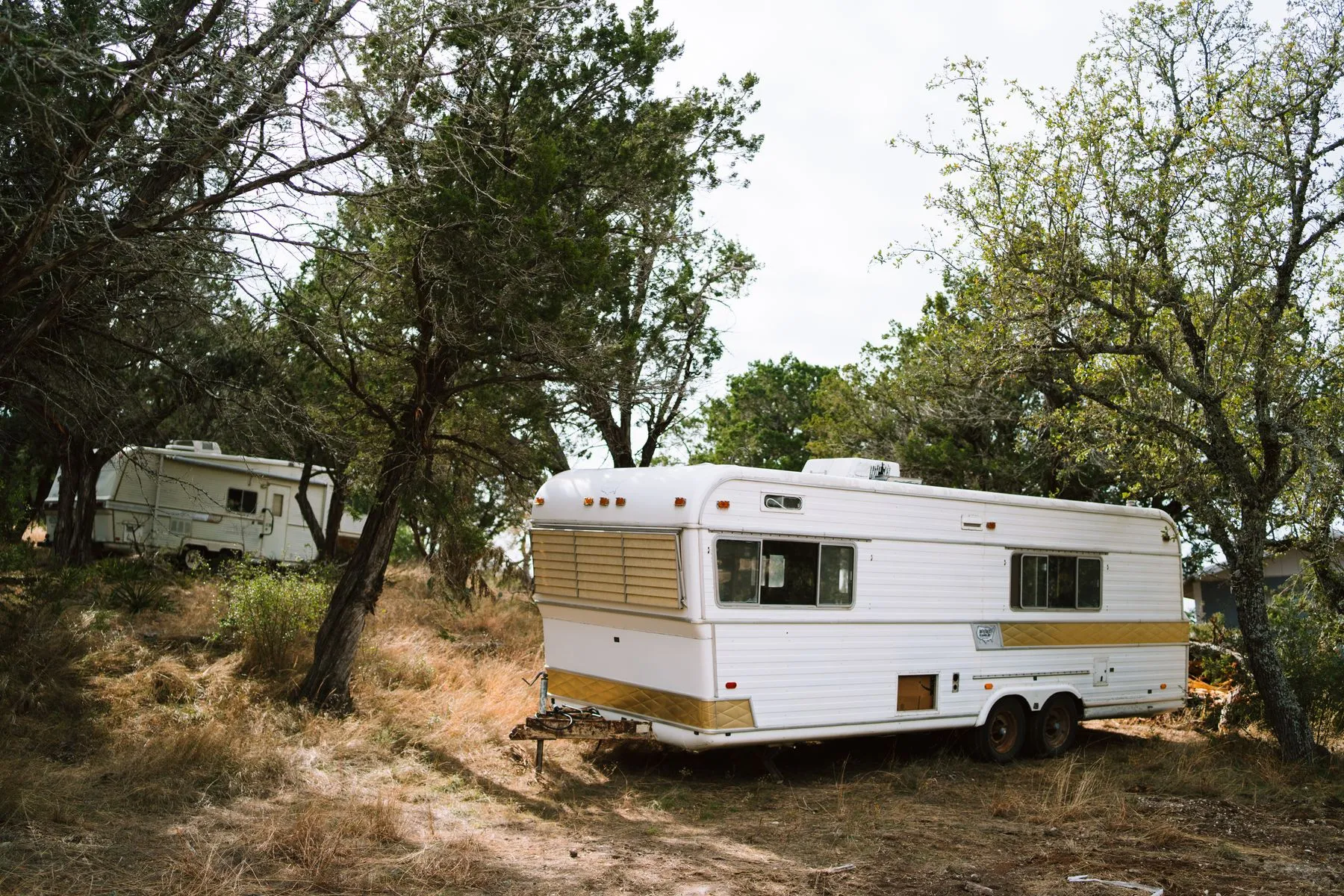
Since January 15, 2019, every new park model RV that relies on the federal RV exemption has to be delivered with a notice in letters at least an inch high: MANUFACTURER’S NOTICE. Beneath it, the manufacturer certifies that the unit is “designed only for recreational use, and not for use as a primary residence or for permanent occupancy.” That sentence comes from a federal housing regulation, and it is the clearest statement of the problem anyone faces when they buy land and plan to live on it in a camper.
The vehicle is legal to own, legal to park and, in most places, legal to sleep in for a while. Whether it is legal to live in on your own land is a separate question, and almost no state answers it. We read the federal definitions, searched for state laws, and pulled real county ordinances to see how the answer actually gets made. The short version: three states have written narrow protections into law, a handful regulate the sewage, and in the rest a county or city zoning code decides, usually with a time limit.
Why an RV is not a house in law
Every RV rule traces back to one definition. The industry standard for RVs, NFPA 1192, covers units built as “temporary living quarters for recreational, camping, travel, or seasonal use.” The trade group that inspects factories against it, the Recreation Vehicle Industry Association, puts it more bluntly in its guidance on tiny homes: RVs and park models “are not houses; they are not manufactured housing; and they are neither designed for nor intended to serve as permanent habitations.”
Federal law draws the same line. A manufactured home under 42 U.S.C. § 5402 is a transportable structure at least 8 body feet wide or 40 feet long, or 320 square feet set up, “designed to be used as a dwelling with or without a permanent foundation.” Self-propelled RVs are excluded outright. Towables were a gray zone until HUD’s November 2018 rule, which rewrote 24 CFR § 3282.15. An RV is now exempt from the HUD manufactured-home code if it is not certified as a manufactured home, is “designed only for recreational use and not as a primary residence or for permanent occupancy,” and is either self-propelled or certified to NFPA 1192 or the park model standard, ANSI A119.5.
That exemption is what keeps RVs cheaper and lighter than manufactured homes. The trade-off is that the RV has never been checked against the standards a dwelling must meet: wind and snow loads, insulation, egress, and plumbing sized for permanent use. States repeat the definition. Florida’s motor vehicle law, for example, defines a recreational vehicle-type unit as “primarily designed as temporary living quarters for recreational, camping, or travel use,” and caps a park trailer at 400 square feet when built to ANSI A119.5.
So when a county zoning code lists permitted dwellings, an RV is usually not on the list. Zoning codes then add a second idea: occupancy. Parking or storing an RV is a vehicle use. Sleeping in it for a weekend is camping. Living in it is a residential use, and residential uses need approved water, sewage and, in many places, a building permit. Most of the rules below are attempts to say where camping ends and living begins.
Park models are the edge case. A park model on a permanent foundation can look like a cabin, but the federal notice still says it is not for permanent occupancy. Our tiny house laws article covers how states classify wheeled tiny homes, which face the same problem.
Who decides: mostly not the state
Land use in the United States is regulated locally. States delegate zoning power to counties and cities through enabling statutes such as Arizona’s A.R.S. § 9-462.01, and those local codes define what a dwelling is, where it may go and for how long a temporary use may last. States step in mostly where health is at stake, through septic and well permits, which is why the state-level rules we found are more often about sewage than about occupancy.
That leaves a patchwork with real gaps. Where a rural county has not adopted zoning, there may be no occupancy rule at all, though septic rules still apply; in Texas, for example, the general zoning statute, Local Government Code chapter 211, is written for cities. Where a county does have zoning, the code may say nothing specific about RVs, which leaves staff to interpret it, and a verbal answer at the counter is only as good as the person giving it. Deed restrictions and homeowners’ association covenants add a third layer that neither the state nor the county enforces. Many rural subdivisions sold as “RV friendly” are governed more by their covenants than by the county.
The practical result: the answer for a parcel is local, written in a zoning ordinance, a health code and sometimes a recorded covenant. The state is usually the right place to look only for sewage rules and for the narrow exceptions below.
The few state laws that exist
We looked for state statutes that grant, limit or preempt local rules on living in an RV on private land, with attention to 2023 to 2026. Three states have something on the books. None creates a general right.
Florida: 36 months after a disaster
Florida’s SB 250, passed after Hurricane Ian and effective July 1, 2023 as chapter 2023-304, added § 125.023 for counties and § 166.0335 for cities. After the Governor declares a state of emergency for a natural emergency in which a home was “damaged and rendered uninhabitable,” a local government “may not prohibit the placement of one temporary shelter on the residential property,” including “a recreational vehicle, trailer, or similar structure.” The protection lasts up to 36 months after the declaration or until a certificate of occupancy is issued, whichever comes first.
There are three conditions: the resident must make a good-faith effort to rebuild (applying for a building permit, submitting plans or getting a construction loan), the shelter must be connected to water and electric utilities and not threaten health or safety, and the resident must actually live in it. It protects people rebuilding a home they lost. It does nothing for a buyer of vacant land.
Oregon: disaster rebuilds, parks and an opt-in rental rule
Oregon has the broadest framework. ORS 197.493, amended three times in 2023, says state agencies and local governments may not prohibit placing or occupying an RV as residential housing “solely because” it is an RV in three situations: when it is sited under ORS 215.490, when it is in a manufactured dwelling or RV park with utility hookups, or when a natural disaster made the occupants’ home uninhabitable. The disaster allowance runs until repairs are finished and an occupancy permit issued, or for up to five years. Local governments can still impose “reasonable” conditions.
ORS 215.490, created by 2023 Oregon Laws chapter 295 (SB 1013), lets a county allow one RV for residential rental on rural residential land, outside urban reserves, if the owner lives in a single-family dwelling on the lot, there are no other dwelling units, the RV is not used for vacation or short-term stays, the tenant owns or leases the RV, and the owner provides essential services. Counties may require registration, a written rental agreement and limits on rent tied to the owner’s costs. The law exempts the RV from the state building code. Note what it is not: it is optional for counties, and it is for a tenant living beside the owner’s house, not for an owner living in an RV on vacant land.
Washington: inside mobile home communities only
Washington’s RCW 36.01.225 and its city counterpart, RCW 35.21.684, bar local governments from preventing the entry or requiring the removal of an RV used as a primary residence, unless it violates fire, safety or other local ordinances. The protection applies only within manufactured/mobile home communities. A broader bill, HB 1443, would have required cities and counties planning under the Growth Management Act to allow up to two “mobile dwellings,” including travel trailers and motor homes, on residential lots that already have a house. It cleared two House committees in 2025, was placed on the floor calendar on February 11, 2026, and was sent back to the Rules Committee on February 19, where it stayed when the session ended. It is not law.
What we did not find
We found no state that requires counties to allow RV living on vacant land, and no state that guarantees RV occupancy during construction outside disaster rebuilding. North Carolina passed several post-Hurricane Helene recovery laws in 2024 and 2025, but the legislature’s site was unreachable during our research, so we could not confirm how they treat RVs and have not summarized them. California’s accessory dwelling unit laws are often described as covering RVs; they are built around permanent units, and we could not open the current statutes to confirm any RV provision, so we make no claim. If you know of a statute we missed, tell us.
Both Florida and Oregon wrote RV protections for people who already had a permitted home and lost it. Lawmakers have been willing to override local zoning for displaced residents, but not, so far, for buyers who want to start out in a camper.
Six ways counties answer
Because the decision is local, the most useful evidence is what county codes actually say. We read ordinances and official county guidance from eight counties in six states. Together they show the range, from a near-ban to a renewable residence permit. None of them is typical of its state; neighboring counties can differ completely.
| County | Vacant land, no house | While building a house | Other routes |
|---|---|---|---|
| Cochise County, AZ | No camping in any form or duration | Temporary use permit plus building permit for the principal dwelling | Up to 6 months a year with an existing house and permit |
| Mohave County, AZ | 30 days a year without a permit, 14 days at a time | 1-year special permit with a building permit; 6-month extensions for good cause | 1-year permit, renewable annually, in A-R and R-E zones; longer stays need approved wastewater |
| Washoe County, NV | Guest camping: 14 consecutive days, 4 visits a year | 18 months from building permit, one 18-month extension, never past 37 months | Care of an infirm person beside an occupied house, with a medical affidavit |
| Siskiyou County, CA | 15-day permits, 30 days a year in total | Not addressed in the camping permit | Up to 1 year after a home is destroyed, with approved water and sewage |
| Alamosa County, CO | Seasonal use 180 days a year, only with installed septic and legal water ($125 permit) | $125 permit valid as long as the building permit; septic, well and building permit required | Never as a permanent residence |
| Park County, CO | Permit needed after two weeks a year; units may not be left on lots when not in use | FAQ directs owners to call Planning and Zoning | Mobile homes only in mobile home parks |
| Putnam County, FL | Self-contained visits up to 14 consecutive days, 120 days a year; 60-day permit for land clearing | 6-month permit once construction permits are secured, one extension, 12 months maximum | 6-month permit for extreme hardship; never “a permanent shelter or housing solution” |
| Deschutes County, OR | Not covered by the 2025 amendment | Not covered by the 2025 amendment | One long-term rental RV on rural lots of 2 acres or more with an owner-occupied house (2025) |
1. A ban outside defined exceptions
Most codes start from a prohibition and carve out exceptions. Washoe County, which includes Reno, says in Development Code section 110.310.35 that a recreational vehicle “shall not be used for sleeping or as a dwelling” except as the section allows. Alamosa County, in Colorado’s San Luis Valley, says “under no circumstances may an RV, camper, or tent be used as a permanent residence.” Putnam County, Florida, uses almost the same words in its guidance on RVs as temporary shelter. Cochise County, Arizona, goes further for vacant land: asked “Can I camp on my vacant property?” its FAQ answers “No. There must be a house, or some other established use, on the property in order to camp. This applies to all forms and durations of camping requests.”
2. A camping allowance measured in days
Many counties distinguish a camping trip from a residence by counting days. Mohave County’s Section 37.K needs no permit when one RV is occupied for no more than 30 days in a calendar year and no single stay exceeds 14 consecutive days. Washoe allows nonpaying guests or relatives to camp for 14 consecutive days, four visits a year, with no water or sewer hookups to buildings. Siskiyou County, California, made unpermitted camping on land “without a legally established residence” a public nuisance in 2017 under County Code § 3-17.01; its permits last up to 15 days and may not add up to more than 30 days a year. Putnam County, Florida, under Land Development Code § 45-131, allows self-contained RV visits in residential zones of up to 14 consecutive days or 120 days a year without a permit, and a 60-day permit to live on site while clearing land. Park County, Colorado, a popular area for mountain land buyers, requires a permit for “camping more than two weeks per year.” These limits are what “weekend use” listings usually mean.
3. A temporary permit while you build
This is the most common legal route to living on your land, and the details vary widely. Mohave issues a one-year special permit once a building permit is obtained, with six-month extensions “by showing good cause.” Washoe allows occupancy for 18 months from the building permit or until 30 days after the certificate of occupancy, whichever comes first, with one 18-month extension, but “in no case” beyond 37 months, and the occupancy ends “with the disconnection of all on-site utility services.” Alamosa’s $125 construction permit lasts as long as the building permit but requires an installed septic system (in Colorado, an OWTS) and a well first. Putnam County, Florida, is tighter: six months once all construction permits are secured and work will start within 90 days, one extension if construction is “diligently progressing,” 12 months at most, and occupancy must end within 30 days of the final inspection. Cochise requires both the building permit and a temporary use permit. The common thread: the house permit comes first, and the RV permit expires with it.
4. Medical and hardship permits
Hardship permits exist so a family can keep a caregiver or an ill relative close. Washoe allows one self-contained RV for the care of an infirm person, only on a property with an occupied single-family home, under an administrative permit backed by a medical affidavit; a 2024 amendment widened who may sign it. Putnam County allows a temporary use permit “for a maximum of six months if an extreme hardship can be demonstrated,” covering medical emergencies or the destruction of the home. These permits help an existing household. They are not a route for a buyer of bare land.
5. Allowed, if the sewage is handled
Some counties let the length of stay grow with the quality of the sanitation. In Mohave, any RV occupancy beyond the 30-day allowance must be “connected to an approved wastewater disposal system,” and a special permit is required. Alamosa permits temporary or seasonal use of up to 180 days a year only where there is “an installed OWTS and a legal source of water.” This is the model that best matches how health officials think: the occupancy question and the sewage question are answered together.
6. Rural zones and larger parcels
The closest thing to legal long-term RV living we found is in Mohave County, where an RV “may be issued a zoning permit as a temporary residence for one (1) year (renewable annually)” in its Agricultural-Residential (A-R) and Residential Recreation (R-E) zones. It is still a temporary permit, renewed each year, and still subject to wastewater rules. Oregon’s new state law has produced a different version: Deschutes County adopted rules by emergency on May 7, 2025, allowing one RV as a long-term rental dwelling on rural residential lots of at least 2 acres (5 in parts of South County), within 100 feet of an owner-occupied house, with sewage, water and electricity provided by the owner.
The sewage problem behind the rules
When planners explain RV limits, sewage comes up first. An RV stores toilet waste in a black tank and sink and shower water in a gray tank, sized for a weekend, not a household. Once someone lives there, the waste has to go somewhere every few days, and health departments know what tends to happen when there is no approved place.
RV waste is also harder to treat than household sewage. North Carolina’s onsite wastewater branch explains in its August 2024 RV guidance that holding-tank wastewater “is quite concentrated due to the ultra-low flow fixtures and the widespread use of commercial chemical additives for odor control,” which can make it “high strength.” The same memo classifies holding-tank waste as domestic septage under state solid waste law and sizes RV park systems at 100 gallons per day per traditional RV and 150 per park model. It adds the sentence that matters for landowners: individual RVs on separately owned parcels, or RVs “designed or used as permanent dwelling units are required to meet the same requirements as a dwelling unit.”
Los Angeles County’s fact sheet for temporary RV housing lays out the four legitimate options: a permitted plumbing connection to a sewer, an existing septic system that a qualified contractor has evaluated for the added load (with a county review fee of $447 to $522), a licensed pumping company, or a dump station. Disposal “onto the ground surface or directly into a storm drain” violates the county code and can bring a fine of up to $500, six months in jail, or both.
A few states write RVs into their sanitation rules directly. Nevada’s NAC 444.7654 counts an RV with holding tanks as a nonsewered toilet. Maryland’s COMAR 26.04.02.08 limits portable sanitation units to three days in 60 without approval. New Mexico’s liquid waste rule sets treatment standards for onsite systems that receive RV waste, and Mississippi requires a development review when more than two homes or RVs share one tract on onsite wastewater. Our septic and composting toilet guide covers the permit sequence, and the composting toilet table shows where a waterless toilet can reduce, but rarely remove, the need for a septic system.
Water and power
Water and power are less often the legal barrier but often the practical one. A hose from a well head is not an approved potable connection in many jurisdictions; Los Angeles County, for example, requires approval for any new line or bib added to serve an RV. Electrical service for an RV usually means a pedestal or a temporary power pole, which needs an electrical permit and inspection where the state or county enforces electrical codes. Off-grid solar avoids the utility but not the permit. Our water guide and solar calculator help size both.
Insurance, loans and taxes
Insurance. An RV is insured as a vehicle. A homeowners policy on the land, if you have one, does not cover the RV, and a standard RV policy may assume seasonal use. Insurers sell “full-timer” endorsements that add liability and contents coverage closer to a homeowners policy; tell the insurer the RV is your residence and where it sits. A claim on a unit occupied in breach of local zoning can raise questions you do not want to answer after a fire.
Loans. Mortgage rules follow the HUD line. Fannie Mae’s manufactured housing eligibility rules require a HUD-code home, and “the manufactured home and the land must be legally classified as real property under applicable state law.” An RV is neither, so it is financed with a consumer RV loan and the land with a land loan or cash. One small benefit: the IRS counts a “house trailer, boat, or similar property that has sleeping, cooking, and toilet facilities” as a qualified home in Publication 936, so interest on a loan secured by the RV may be deductible as home mortgage interest if you itemize.
Taxes. An RV is titled and registered with the motor vehicle agency, and it pays registration fees or a vehicle license tax rather than real property tax. The land is taxed as land, usually vacant land. Some states let a unit that is permanently attached be reclassified. Florida’s § 320.0815 lets a mobile home or recreational vehicle-type unit “permanently affixed” to land carry an “RP” real property sticker once the property appraiser includes it in the owner’s assessment. Reclassification for tax purposes does not change what the zoning code thinks the unit is.
How counties find out
Most counties do not patrol for campers. Enforcement usually starts with a neighbor. Cochise County, Arizona, says on its code compliance page that “most cases start when a resident reports a possible violation,” lists “unauthorized long-term occupancy of tents or recreational vehicles” among common zoning violations, and accepts anonymous complaints. Its FAQ adds that investigations may use county records, “publicly visible conditions, aerial imagery,” photographs submitted with complaints and observations from public roads.
The process is slow but cumulative: a notice, a deadline, a reinspection, then an administrative hearing. Cochise County warns that if it has to pay to abate a violation, the costs can be assessed against the owner and “recorded as a lien against the property.” Other triggers are less obvious: applying for an address, a septic permit or a power drop for an RV pad; a building permit that expires while someone is living on site; or a sale, when a buyer’s title search finds an open code case.
The lesson is not to hide. A complaint-driven system means that a setup that works quietly for years can end with one new neighbor. Having the county’s answer in writing before you move in is what protects you when that happens.
All 50 states
The table below combines our existing state research with the statutes found for this article. “Counties and cities decide” means we found no statewide rule on RV occupancy of private land; it does not mean RV living is allowed. Even in the 3 states with protective laws, the protections are narrow. Each summary links to the state source where one exists, and every state guide lists the local offices to call.
50 states
| Alabama | Counties and cities decide | No state rule addressing full-time RV occupancy on private land was found. City or county zoning decides it, and ADPH sewage permitting applies to any dwelling generating wastewater. | — |
|---|---|---|---|
| Alaska | Counties and cities decide | No state rule addressing full-time RV occupancy on private land was found. Where a borough or city has zoning, it decides; DEC rules still govern wastewater disposal. | — |
| Arizona | Counties and cities decide | No statewide rule grants or bars full-time RV occupancy on private land. Arizona gives cities and counties zoning authority, so local definitions, time limits, and permits decide it.A.R.S. § 9-462.01 (Municipal zoning regulations) Source | — |
| Arkansas | Counties and cities decide | No state rule addressing full-time RV occupancy on private land was found. Local zoning, where adopted, decides it, and any wastewater still needs an approved disposal method. | — |
| California | Counties and cities decide | No statewide rule establishes a right to occupy an RV year-round on private land. Cities and counties decide through zoning, temporary-use, and building rules, and sewage disposal must be approved. | — |
| Colorado | Counties and cities decide | No statewide rule creates a right to occupy an RV year-round on private land. County or city zoning decides, and wastewater must be handled under local health rules. | — |
| Connecticut | Counties and cities decide | No Connecticut statute specifically addressing full-time RV occupancy on private land was identified. Municipal zoning decides, and continuous occupancy can trigger local health review of septic capacity. | — |
| Delaware | Counties and cities decide | No Delaware statute specifically addressing full-time RV occupancy on private land was identified. County and municipal zoning decide, and any wastewater disposal still needs DNREC approval. | — |
| Florida | State law limits local bans in some cases | Florida law defines RVs as temporary living quarters, and county or city zoning decides full-time occupancy. Since July 1, 2023 (SB 250), after a declared emergency a local government may not prohibit one RV or similar temporary shelter on a residential property whose home was made uninhabitable, for up to 36 months while the owner rebuilds.Section 125.023, Florida Statutes Source | Since July 1, 2023, after a declared natural emergency leaves a home uninhabitable, counties and cities may not prohibit one RV or similar temporary shelter on the lot for up to 36 months while the owner rebuilds (ch. 2023-304).Fla. Stat. § 125.023 Source |
| Georgia | Counties and cities decide | No Georgia statute specifically addressing full-time RV occupancy on private land was identified. County or city zoning decides; get a written local answer on duration and sanitation. | — |
| Hawaiʻi | Counties and cities decide | No Hawaii statute specifically addressing full-time RV occupancy on private land was identified. County zoning and building rules decide, and wastewater disposal still needs Department of Health approval. | — |
| Idaho | Counties and cities decide | No statewide Idaho source was found that creates a general right to occupy an RV permanently on private land. County or city zoning decides; the domestic exemption's RV-park limits are water rules only. | — |
| Illinois | Counties and cities decide | No Illinois state rule on full-time RV occupancy of private land was found. County or municipal zoning decides, and a permitted well or sewage system does not grant occupancy permission. | — |
| Indiana | Counties and cities decide | No Indiana state rule on full-time RV occupancy of private land was found. County or municipal zoning decides, and local health departments may set sanitation conditions. | — |
| Iowa | Counties and cities decide | No Iowa state rule on full-time RV occupancy of private land was found. County or city zoning decides, and county septic and well rules still apply to any long-term use. | — |
| Kansas | Counties and cities decide | No Kansas state rule on full-time RV occupancy of private land was found. County or city zoning decides, and county sanitary codes govern wastewater from any long-term use. | — |
| Kentucky | Counties and cities decide | No Kentucky state rule on full-time RV occupancy of private land was found. Local zoning decides, and the local health department governs wastewater from any long-term use. | — |
| Louisiana | Counties and cities decide | No Louisiana state rule on full-time RV occupancy of private land was found. Parish or municipal zoning and floodplain rules decide, and the parish health unit governs wastewater. | — |
| Maine | Counties and cities decide | No Maine statute on full-time RV occupancy on private land was identified. Municipal zoning, or the Land Use Planning Commission in unorganized areas, decides; long-term use raises wastewater permit questions. | — |
| Maryland | State sanitation rule addresses RVs | No Maryland statute addressing full-time RV occupancy on private land was identified. County zoning decides; state rules limit portable sanitation units to 3 days in 60 without Approving Authority authorization.COMAR 26.04.02.08 — Special Methods of Sewage Collection and Disposal Source | — |
| Massachusetts | Counties and cities decide | No Massachusetts statute addressing full-time RV occupancy on private land was identified. Town zoning bylaws and the board of health decide, including how wastewater from occupied units is handled. | — |
| Michigan | Counties and cities decide | No statewide permission for full-time RV occupancy on private land was established. Township or county zoning, time limits and local sanitation rules decide. | — |
| Minnesota | Counties and cities decide | No statewide permission for full-time RV occupancy on private land was established. County, city or township zoning and the local SSTS authority decide duration, season and sanitation requirements. | — |
| Mississippi | State sanitation rule addresses RVs | No statewide RV occupancy rule was found. MSDH requires a development checklist when more than two homes or RVs share one tract on on-site wastewater; local zoning decides use.MSDH On-Site Wastewater Regulations, Rule 3.1.11 Source | — |
| Missouri | Counties and cities decide | No state rule on full-time RV occupancy of private land was found. City or county zoning decides, and wastewater from an occupied RV still needs a lawful disposal method. | — |
| Montana | Counties and cities decide | No statewide rule granting or barring full-time RV occupancy of private land was found. County or city zoning, sanitation, floodplain and recorded covenants decide. | — |
| Nebraska | Counties and cities decide | No state rule on full-time RV occupancy of private land was found. County, city or village zoning decides, and wastewater still needs a Title 124 system or approved disposal. | — |
| Nevada | State sanitation rule addresses RVs | No statewide rule permits permanent RV occupancy of private land. NAC 444 treats an RV with holding tanks as a nonsewered toilet, and county zoning decides occupancy.NAC 444.7654 — "Nonsewered toilet" defined Source | — |
| New Hampshire | Counties and cities decide | No state rule on full-time RV occupancy of private land was found. Town zoning decides, and wastewater from an occupied RV must go to an approved system or holding arrangement. | — |
| New Jersey | Counties and cities decide | No state rule granting full-time RV occupancy on private land was found. Municipal zoning and the local construction and health officials decide whether an RV may be occupied. | — |
| New Mexico | State sanitation rule addresses RVs | State rules address RV wastewater: onsite systems receiving RV waste must meet treatment standards. Whether an RV may be occupied full time on private land is a county or municipal zoning question.Liquid Waste Disposal — 20.7.3 NMAC Source | — |
| New York | Counties and cities decide | No New York statute specifically addressing full-time RV occupancy on private land was identified. Town, village or city zoning decides, and wastewater still falls under local health department rules. | — |
| North Carolina | State sanitation rule addresses RVs | No statute addresses full-time RV occupancy on private land; county or municipal zoning decides. State onsite wastewater guidance from August 2024 says an individual RV on its own parcel must meet the same wastewater requirements as a house.NC DHHS: Permitting and Design Guidance for Wastewater Systems for RV Parks (Aug. 21, 2024) Source | State onsite-wastewater guidance (Aug. 21, 2024) says individual RVs on separately owned parcels, or RVs used as permanent dwellings, must meet the same wastewater requirements as a dwelling unit.NC DHHS RV wastewater guidance Source |
| North Dakota | Counties and cities decide | No statewide rule authorizing full-time RV living on private land was identified. State RV park licensing does not cover a single RV on a parcel; local zoning and health authorities decide. | — |
| Ohio | Counties and cities decide | No Ohio statute specifically addressing full-time RV occupancy on private land was identified. Township, county or municipal zoning decides, and sewage disposal still falls under the local board of health. | — |
| Oklahoma | Counties and cities decide | No statewide rule on full-time RV occupancy of private land was found. County or city zoning, plus DEQ sewage rules, decide whether an RV may serve as a dwelling. | — |
| Oregon | State law limits local bans in some cases | ORS 197.493 bars state and local governments from prohibiting RV occupancy solely because it is an RV in three cases: an RV sited under ORS 215.490 (counties may allow one rented RV beside an owner-occupied rural home), an RV park or manufactured dwelling park with hookups, or for up to five years after a disaster made the home uninhabitable. Otherwise county planning and DEQ wastewater rules decide.ORS 197.493 Source | ORS 197.493 bars bans based solely on RV status for an RV sited under ORS 215.490, in a park with hookups, or for up to 5 years after a natural disaster makes the home uninhabitable. ORS 215.490 (2023) lets counties opt in to one rented RV on an owner-occupied rural lot.ORS 197.493 Source |
| Pennsylvania | Counties and cities decide | No statewide rule on full-time RV occupancy of private land was found. Municipal zoning, the local SEO for sewage and UCC administration decide whether an RV may serve as a residence. | — |
| Rhode Island | Counties and cities decide | No statewide rule on full-time RV occupancy of private land was found. Municipal zoning and DEM wastewater rules decide whether an RV may serve as a dwelling. | — |
| South Carolina | Counties and cities decide | No statewide rule on full-time RV occupancy of private land was found. County or municipal zoning decides, and any occupied unit still needs an approved wastewater method under R.61-56. | — |
| South Dakota | Counties and cities decide | No state rule on full-time RV occupancy of private land was found. County, municipal or township zoning decides, and water and wastewater rules still apply to the site. | — |
| Tennessee | Counties and cities decide | No state rule on full-time RV occupancy of private land was found. County or city zoning decides, and an RV with plumbing still needs an approved sewage disposal method. | — |
| Texas | Counties and cities decide | No statewide rule grants or bars full-time RV occupancy on private land. City zoning, any special county authority, deed restrictions, floodplain rules, and approved sewage decide it.Texas Local Government Code Chapter 211 (Municipal Zoning Authority) Source | — |
| Utah | Counties and cities decide | The statewide sources we reviewed do not address full-time RV occupancy on private land. County or city zoning and the local health department decide, including temporary occupancy during construction. | — |
| Vermont | Counties and cities decide | No Vermont statute specifically addressing full-time RV occupancy on private land was identified. Town zoning bylaws decide, and any soil-based wastewater system for a camper needs a state permit. | — |
| Virginia | Counties and cities decide | No Virginia statute specifically authorizing or banning full-time RV occupancy on private land was identified. Local zoning ordinances decide, and some counties limit stays or require permits. | — |
| Washington | State law limits local bans in some cases | RCW 36.01.225 and 35.21.684 stop counties and cities from barring an RV used as a primary residence only inside manufactured/mobile home communities. Elsewhere county and city zoning decide; HB 1443, which would have allowed RVs on many residential lots, did not pass in 2026.RCW 36.01.225 Source | RCW 36.01.225 and 35.21.684 stop counties and cities from barring an RV used as a primary residence, but only inside manufactured/mobile home communities. HB 1443 (2025–26), which would have allowed RVs on many residential lots, did not pass.RCW 36.01.225 Source |
| West Virginia | Counties and cities decide | No statewide rule on full-time RV occupancy of private land was identified. County or municipal zoning, where it exists, and local health sewage rules decide. | — |
| Wisconsin | Counties and cities decide | No statewide rule allowing year-round RV residence on private land was identified. Local zoning, camping-unit rules and sanitation requirements decide duration and use. | — |
| Wyoming | Counties and cities decide | No statewide rule granting or barring year-round RV living on private land was identified. County land-use rules, duration, sanitation and recorded restrictions decide. | — |
State law limits local bans (3)
State sanitation rule names RVs (5)
Counties and cities decide (42)
Every other state. In these, the zoning code for the specific parcel is the rule.
Before you buy: a playbook
Five questions for the county planning office
- What is the zoning of this parcel, and does that zone allow any residential use of an RV? Give the parcel number, not just the address or the listing.
- Can anyone stay overnight on the parcel before a house exists, and for how many days a year? Ask about camping, not just “RV use,” and ask whether a permit is needed.
- Is there a temporary-use permit for living in an RV while building, and what triggers and ends it? Ask whether it needs an issued building permit, how long it lasts, how renewals work and what counts as progress.
- What does the health department require for sewage and water from an occupied RV? Ask whether an RV can connect to a septic system designed for the future house, and what a holding-tank pumping arrangement needs.
- Are there open code cases, prior permits or recorded restrictions on this parcel? Ask code enforcement directly. Then read the deed restrictions yourself; the county will not enforce them, but a neighbor or association can.
Get the answer in writing
Email the questions with the parcel number and your planned dates, and ask for a written reply. Some counties issue a formal zoning verification letter for a fee; that is the strongest document short of a permit. A phone call or a counter conversation is a starting point, not a defense. Keep the reply with your purchase records, and note the code section it cites so you can check it against later amendments. Our land-buying guide lists the other records to collect.
The “temporary while building” sequence
- Confirm the parcel can support a septic system and a well or water supply before closing. A failed soil test ends the house plan and the RV plan together.
- Apply for the house building permit and the septic permit first. Most temporary RV permits depend on an issued building permit.
- Apply for the temporary-use permit for the RV, with the sewage plan the health department accepts.
- Install the septic system early, sized for the house, and connect the RV only if the health department allows it.
- Book inspections on schedule. A stalled permit is the most common reason a temporary RV permit is not renewed.
- Plan for removal or storage of the RV at final inspection; many permits require the RV to stop being occupied when the certificate of occupancy issues.
Our build sequence guide and cost guide help estimate how long the temporary period will really be. If the county has no residential building code, read what “no code” really means before assuming the temporary rules do not apply.
Red flags in “RV friendly” land listings
- No code section cited. “RV friendly” or “no restrictions” is a marketing phrase. Ask the seller which ordinance they mean, then check it.
- Neighboring campers as proof. Other RVs nearby may be unpermitted, grandfathered or under an open code case.
- “Camping allowed” without a time limit. Many counties allow camping only for set days per year, and some only with an existing house.
- No septic feasibility. A parcel that cannot pass a soil evaluation cannot become a permitted homesite, and an RV on it has no long-term sewage answer.
- Covenants that are not attached to the listing. Ask for recorded restrictions before paying a deposit. Some rural subdivisions limit RV use more strictly than the county.
- Seller financing with forfeiture on default. Common on cheap rural land. If a code case or permit delay disrupts your plans, you may lose the land and everything paid.
Living in an RV on your land is legal in many counties for a defined purpose and period: while you build, during a camping season, or after a disaster. Treated as that, it is a sound way to start. Treated as a permanent home, it is usually a code violation waiting for a complaint.
Questions readers ask
Can I live in an RV on my own land full time?
Only where the local zoning code allows it, and most do not allow it indefinitely. No state gives landowners a general right to live year-round in an RV on their own property. In our review, 3 states (Florida, Oregon, Washington) limit local bans in specific situations, such as rebuilding after a disaster. Everywhere else, the county or city decides, and the common answers are a time-limited permit while you build, a short camping allowance, or a ban outside RV parks.
How long can you live in an RV on your property while building a house?
It depends on the county. In the counties we checked, temporary permits tied to an active building permit ran from six months (Putnam County, Florida) to 18 months (Washoe County, Nevada), with extensions only while construction is progressing. Cochise County, Arizona, for example, allows RV occupancy during construction of a principal dwelling only with a building permit and a temporary use permit. Get the duration, renewal conditions and what counts as progress in writing before you buy.
Is it legal to live in an RV on land with no house?
In many counties, no. Some allow short camping stays on vacant land, but many require an existing dwelling or an active building permit before anyone sleeps on the property. Cochise County’s answer to “Can I camp on my vacant property?” is “No,” and it applies to “all forms and durations of camping requests.”
Can I connect my RV to a septic system?
Usually only with approval. Health departments treat an occupied RV as a source of domestic sewage, and RV holding-tank waste is unusually concentrated. Expect to need an existing permitted system that is evaluated for the extra load, or a new system permitted for the RV. Dumping tanks onto the ground violates health codes; in Los Angeles County it can bring a $500 fine or jail time.
Can I get a mortgage on land with an RV on it?
Not one that counts the RV as the home. Conventional mortgages for factory-built homes require a HUD-code manufactured home titled as real property with the land. An RV is a vehicle, financed with an RV loan, and the land is financed separately, usually with a land loan or cash.
Sources
Official and primary sources consulted for this article, checked October 17, 2026. Laws change; open the source before relying on a summary.
- 24 CFR § 3282.15, Exemption for recreational vehicles — U.S. Department of Housing and Urban Development (via Cornell LII)
- Manufactured Home Procedural and Enforcement Regulations; Clarifying the Exemption for Manufacture of Recreational Vehicles, 83 FR 57688 (Nov. 16, 2018) — HUD, Federal Register. Effective January 15, 2019
- 42 U.S.C. § 5402, Definitions (manufactured home) — U.S. Code (via Cornell LII)
- NFPA 1192, Standard on Recreational Vehicles — National Fire Protection Association
- Important Information Regarding “Tiny Homes” and the RV Industry — Recreation Vehicle Industry Association. Industry trade association statement
- Fla. Stat. § 320.01, Definitions — Florida Legislature
- Fla. Stat. § 320.0815, Mobile homes and recreational vehicle-type units required to have appropriate license plates or stickers — Florida Legislature
- Fla. Stat. § 125.023, Temporary shelter prohibition — Florida Senate
- Fla. Stat. § 166.0335, Temporary shelter prohibition (municipalities) — Florida Senate
- CS/CS/SB 250 (2023), enrolled text, chapter 2023-304 — Florida Senate
- ORS 215.490, Recreational vehicles on occupied residential properties — Oregon Revised Statutes (text via oregon.public.law). Official site oregonlegislature.gov was unreachable during research
- ORS 197.493, Placement and occupancy of recreational vehicle — Oregon Revised Statutes (text via oregon.public.law)
- RCW 36.01.225 (counties) and RCW 35.21.684 (cities) — Washington State Legislature
- HB 1443 (2025–26), Concerning mobile dwellings, bill history — Washington State Legislature
- Development Services and Code Compliance FAQs — Cochise County, Arizona
- Code Compliance — Cochise County Development Services
- Zoning Regulations Section 37.K, Establishment of Recreational Vehicles and Park Model Units — Mohave County, Arizona
- Can I live in an RV on my property? (311 knowledge base) — Washoe County, Nevada
- Draft ordinance amending Development Code § 110.310.35 (care of the infirm), Nov. 19, 2024 — Washoe County Board of County Commissioners. Reproduces the section text, including construction-period limits
- Camping Administrative Permit, Siskiyou County Code § 3-17.01 — Siskiyou County Planning Division, California
- Camping Administrative Permit – Extended Stay (Ordinance 18-09) — Siskiyou County Planning Division, California
- RVs and camping FAQ — Alamosa County, Colorado
- Frequently Asked Questions — Park County, Colorado
- Recreational Vehicle as Temporary Shelter — Putnam County Planning and Development Services, Florida. County brochure summarizing Land Development Code § 45-131
- 247-23-000700-TA, RVs as Rental Dwellings — Deschutes County Community Development, Oregon
- A.R.S. § 9-462.01, Zoning regulations — Arizona Legislature
- Texas Local Government Code chapter 211, Municipal Zoning Authority — Texas Legislature
- Permitting and Design Guidance for Wastewater Treatment and Dispersal Systems for Recreational Vehicle Parks (Aug. 21, 2024) — North Carolina DHHS, On-Site Water Protection Branch
- Public Health Requirements for Temporary Use of Recreational Vehicles (fact sheet, Sept. 29, 2021) — Los Angeles County Department of Public Health
- About Recreational Vehicles (temporary use housing) — Los Angeles County Department of Public Health
- Publication 936, Home Mortgage Interest Deduction (2025) — Internal Revenue Service
- Selling Guide B5-2-02, Manufactured Housing Loan Eligibility — Fannie Mae
- COMAR 26.04.02.08, Special Methods of Sewage Collection and Disposal — Maryland Department of the Environment
- NAC 444.7654, “Nonsewered toilet” defined — Nevada Administrative Code (via Cornell LII)
Keep reading
- Tiny house laws by state: Appendix Q, wheels and the 400-square-foot line
- Counties without building codes: what “no code” really means
- Rank all 50 states on the factors that matter to you
- Find the authorities and starting rules for your state
Articles are reported from official statutes, regulations, agency guidance and public datasets, linked above. They explain how rules work; they do not approve a particular property. Read the research method or report an error.